At the intersection of art and commerce is David Ogilvy, directing traffic, crafting copy, and turning phrases. In a bit of blasphemy for a wannabe marketer, I know very little about the man, other than he was/is known as the Steven P. Jobs of his industry, rewriting the rules of advertising as he went.
Copywriting was tip of Ogilvy’s spear – the fine point backed up by research and analysis that made a few words move a few million (dollars, units, people, what-have-you). I’ve made a living as an editor and writer, but I’ve never written copy, and who knows if I could have. Writing news stories and editing health content are broad brush strokes compared to the tatoo-ink precision required of penning ad copy.
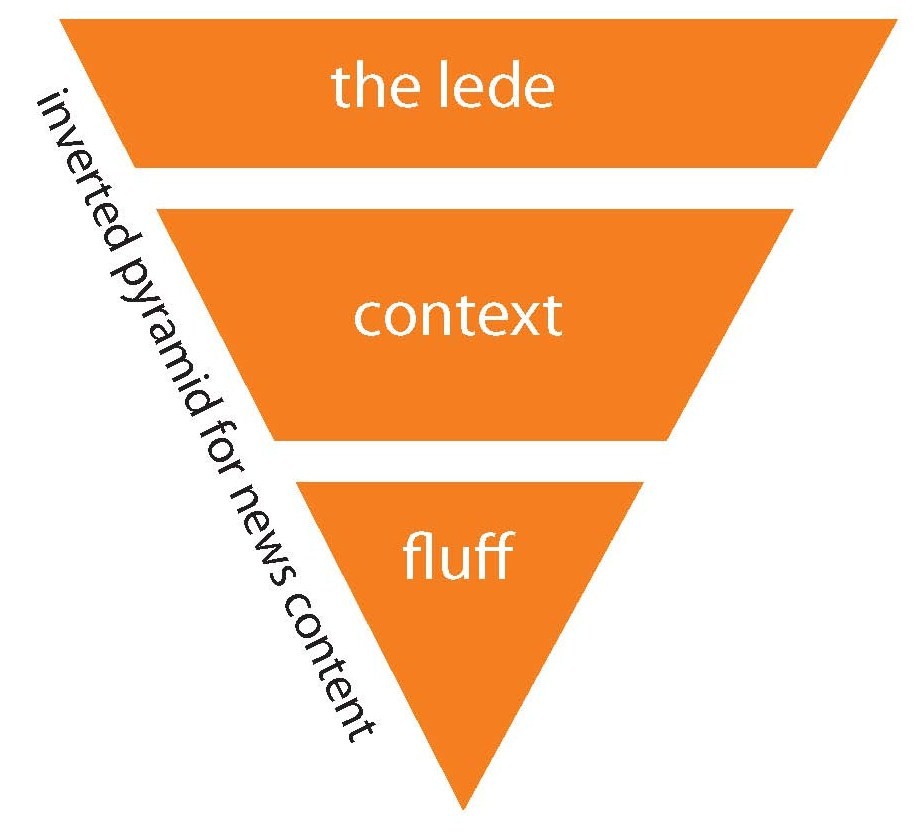 In journalism, the hoary format of the inverted pyramid applies even through the digitization of news: fill the top with the important stuff (the lede), and gradually taper down into the fluff. The fluff reads like a straight transcript of a reporter’s notes with no sense of an actual story being conveyed. It’s the journalistic equivalent of running out the clock. In contrast, an ad is read in a few ticks of the second hand.
In a quote collected for Good Advice on Writing, Ogilvy advocates for writers to:
“Avoid superlatives, generalizations, and platitudes. Be specific and factual. Be enthusiastic, friendly and memorable. Don’t be a bore. Tell the truth, but make the truth fascinating.”
I asked Brendan Shea, current Senior Copywriter at Loyola University Chicago and former copyeditor at Leo Burnett, if he agreed.
“It’s the classic point of view, but I have a slightly different philosophy,” said Brendan. As a fan of Ogilvy, Brendan can rattle off D.O.’s book titles and quote his maxims, but sees differences in how copywriters approach their words now. “Ogilvy also said, ‘the more you tell, the more you sell,’ but I don’t think that always applies today. The ads need to resonate fast.”

Brendan’s ads extolling the virtues of a Jesuit education are resonating all over the city on CTA properties — even wrapping a whole train for the “Enter One Way, Leave Another” campaign for Loyola. Brendan details a specific copywriting philosophy, and, with some advice for wannabe copywriters, he said, “Have a thick skin. You are going to write something that will be out there so you need to own it. You’ll do great stuff, and you’ll do terrible stuff. Either way, it’s going to produce a visceral reaction.”
He has personal proof of that reaction — one of his campaigns came up for discussion in one of his graduate school classes, and the feedback from at least one classmate was not positive. When his boss heard this, she told him he should have defended the piece, but Brendan wasn’t fazed. “I actually liked hearing what was said. It helps. You have to stop caring. Just listen and learn from people.”
 The True Gen