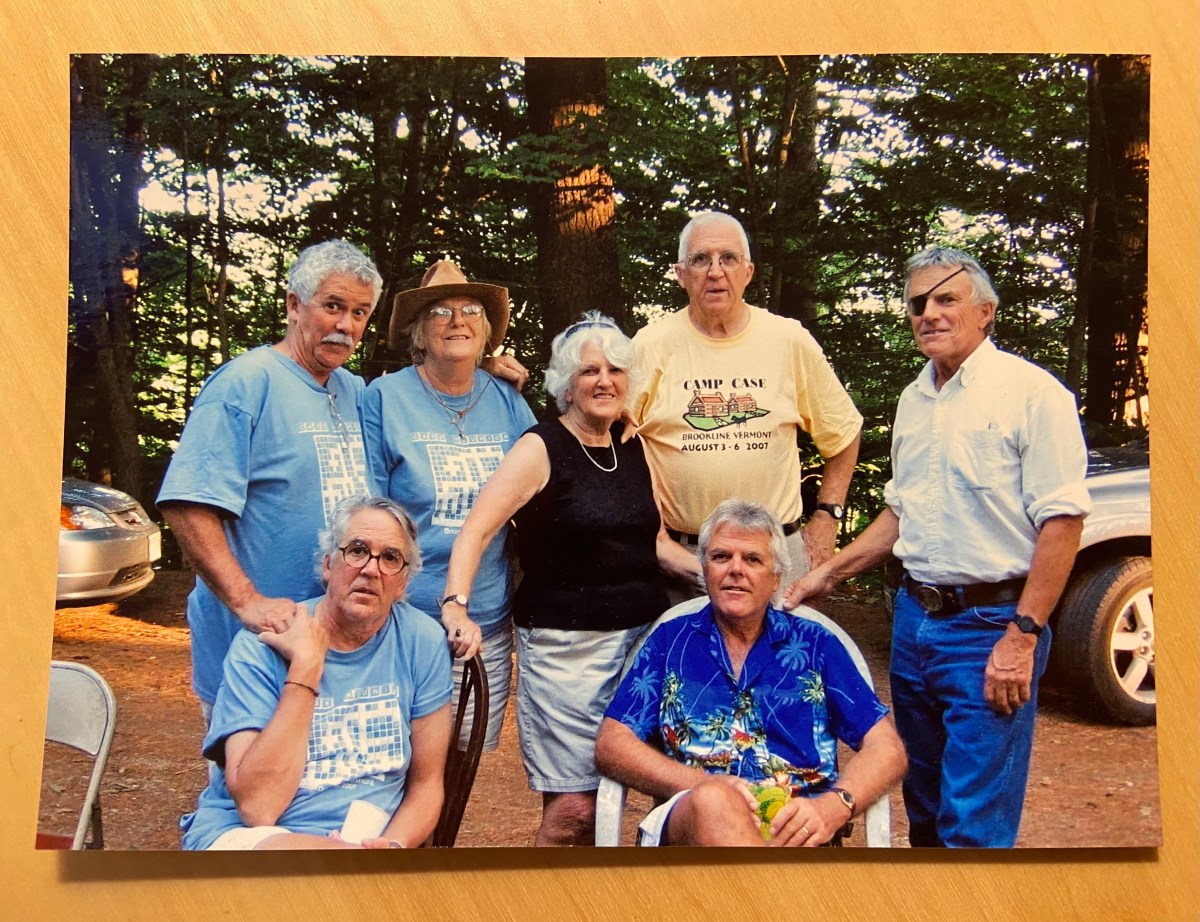
Editor’s note: Mike Case is the man in the yellow shirt (pictured above) and he’s been as much of an adventurer as the man in the yellow hat (Curious George’s friend). As you’ll read below, he made his home in wild places and found a way to get along quite well. He wrote this history of his family and a detailed description of his 90 years of life before his eyesight began to fade.
INTRODUCTION
When I was growing up, I used to ask my dad where our family came from. I’m not sure why I didn’t ask my mom. Maybe I did and she told me to ask my dad.
Anyway, I learned in bits and pieces where our family fit into what I thought was the world around us. Some of what he told me was true, some was strictly comical, and a lot was just made up. This autobiography (or whatever it is) will probably contain the same elements although hopefully more of the truth.
I’m not anxious to expose all of the things I’ve done to a bright light. There were not any horrific crimes in my history but there were definitely some actions that might be looked askance by the law or society or both. Then there are some parts of my past that were so incredibly stupid that I still want to twist the truth about them.
I was blessed (or was it cursed?) with what seems to me to be an exceptional memory. That’s a big help in trying to write an autobiography. But it’s a burden when I’m trying to keep the respect of those that follow after me. I’m just hoping that the preponderance of what I have done will weigh heavily on the good side so that the screw-ups won’t look quite so bad.
In some cases, I have glossed over some aspects of my life that might embarrass others. Some of the people who read this will see when I have done that. I hope they will understand that I don’t want to cast a bad light on other people. I really don’t care how I will look because by the time anyone reads this, I’ll probably be in the wind.
It seems to me that writing about my life should include, to some extent, a little about those that came before me — my ancestors. So the first part of this will be about my mom’s and dad’s families. So let’s start with the Cases.
BEFORE 1900
In the early 1600s a seventeen-year-old boy set out from England to go to the “New World.” His Name was John Case, son of William Case of Aylsham. We’re not sure where John set out for but what he did was get on a ship that sailed to the British colonies in North America. He probably landed in or near Boston, which had only been settled within the previous ten years, and then made his way west to the Connecticut River to what is now Springfield, Massachusetts. From there he probably worked his way down river to the Long Island Sound.
There were some recent settlements on the Connecticut side of Long Island Sound but probably not much work. The people in Saybrook could see Long Island 10-miles to the south and often rowed or sailed boats there to do business with the Dutch farmers who had settled there a few years before.
YANKEE LORE
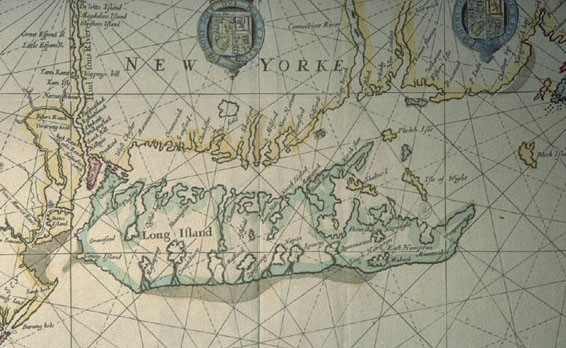
There is a story that John Case rowed across Long Island Sound and worked for several of those farmers and after a year or so went back to the Connecticut colony. For some time afterwards, the Dutch farmers referred to the people across the sound in Connecticut as Jan (John) Cases. Since the Dutch language pronounces the letter J like the English language pronounces the letter Y, Jan Cases sounded like Yan Cases which soon became Yankees. I don’t know if this is true or not but it is as good as any other theory.
THE DESCENDANTS
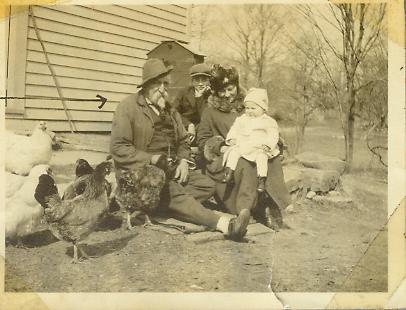
After John settled down in what is now the Simsbury, Connecticut, area, he gradually accumulated some farmland, got married, raised ten children and became one of the leading citizens of the area. He served briefly as a sheriff and in the legislature but was primarily a farmer.
After John (1.), the descendants looked like this:
2. Joseph Case
3. Joseph Case, Jr.
4. Hosea Case
5. Asa Case
6. Milton Case
7. Charles Case
8. David North Case
9. David Van Buren Case
10. Me, Michael Van Buren Case
All of the Cases up to David North Case were farmers. David North Case went to work for the Travelers Insurance Company in Hartford, Connecticut, and stayed with them until he died.
MORRISSEYS (AND LAMBERTS) PRE-1900
My great grandfather William Morrissey was born in Banoque, County Limerick, on August 15, 1843. His wife was Mary Hassett born December 25, 1846.
William arrived in America just after Civil War. A great deal of the migration from Ireland to America was because of the great potato famine but that was mostly in the 1840s.
He was an apprentice tailor while in Ireland and he tried to continue in that trade in America but the tailors guild was German. So he became a machinist at Upson Nut & Bolt. He was a small man. He had a limp and a contorted face on one side so he wore a full beard.
The couple had 13 children plus one adopted daughter, Marie. She was a crippled orphan and walked with a crutch. She became the argument-settler and was a dominant figure in family.
My mother’s mother’s family were Lamberts from Ireland.
DAVID VAN BUREN CASE

It was always easy to remember how old my father was because he was born in 1900. The date was March 4. A Sunday. He never talked much about his life at all or, at least, not as much as my mother did. He was the oldest of three, the other two being sisters Emily and Lois. He loved the outdoors and mentioned he had been on camping trips when he was young with a friend named Kirch Holt. I think they went to Maine but it may have been New Hampshire or perhaps both.
Dad’s grandfather, Charles Case, was a civil war veteran. I thought I remembered meeting him when I was very young but I was mistaken because he died in 1927 at the age of 86. He supposedly had been hit by a rolling cannonball during the Civil War. The story goes that his leg bothered him where he was wounded and a doctor had prescribed a shot of whiskey a day to help relieve the pain. He made a great show of downing that “horrible stuff” just to make his teetotaling wife, Rachel, angry.
When dad was 18, he quit school and joined the Army. He joined in the first couple of days in November, 1918, and the armistice was declared on the 11th. He was discharged a month later. I never knew this until I was going through his papers after he died. I don’t think he ever actually told me he fought in Europe but I don’t think he discouraged me from thinking so.
My father’s and my middle name, Van Buren, was my grandmother’s maiden name. She was from New York City and was a descendent of the Dutch who founded New Amsterdam (later changed to New York City). My dad said we were related to the 8th President of the United States, Martin Van Buren. That is probably true but he was likely a 16th cousin, twice removed.
My grandmother’s mother was a Smith. Her father was Ephingham Van Buren but I don’t know anything at all about him except his name.
ALYCE MOYLAN (MORRISSEY) CASE
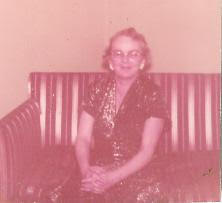
Katherine Hepburn, whose doctor father was one of my grandfather’s friends and a medical colleague, lived a few doors down from the Morrisseys and the story was told (true or not) that she went out with my uncle Paul.
My mother’s other claim to fame was that she had dated Brendan Gill, a long-time writer for The New Yorker magazine. I never met him until he attended her funeral.
There were eight kids in the Morrissey family — Paul, Rosiland, Alyce, Girard, William, Richard, Robert, and Ann.
MY EARLIEST YEARS
On January 16, 1919, the 19th Amendment to the Constitution became law. This amendment was popularly known as Prohibition because it prohibited the manufacture, sale, distribution, and possession of alcoholic beverages in the United States. It never worked, and on April 7, 1933, beer became legal again in the United States.
Prophetically, Michael Van Buren Case was born in Hartford, Connecticut, on the same day
I was born at St. Francis hospital, the first of four Case kids to be born there. Dave and Allie Case were living in West Hartford, maybe on Whitman Avenue, at the time. A short time later they moved to Canton, Connecticut, and lived in an old house called the 1776 house. It had a barn and small pond on the property. I was told that when I was about 15-months-old, a pot of hot coffee got spilled on me and my folks thought I might be scarred for life. In fact I have no scars at all from the incident.
While in Canton, the Case’s used the baby-sitting services of a local family. They were the Ericksons. Art Erickson owned a local sawmill and would often take me for rides in “Art’s Tuck” as I called it. For several years after the Cases moved from Canton, I would be taken to the Ericksons to visit for several days or even weeks at a time. One of the things I remember is a special cup they kept for me. They would let me drink coffee (with lots of milk and sugar) and I really felt grown up there.
After Canton, the family moved back to West Hartford to a two-story duplex. The Cases lived in the downstairs apartment and Allie Case’s sister, Rosalind (Roley) lived with her husband Ed Sullivan and son Teddy upstairs. Teddy, later known as Ed, was 3 days older than me. Later in life he was a New York state assemblyman for many years.
I guess life on Dover Road was fairly uneventful. It was only a couple of miles from both my father’s mother’s house on Woodrow Street and my mother parent’s (the Morrisseys) house at 40 Sedgwick Road in West Hartford. The latter was a beautiful old Tudor style house of brick and big dark timbers. It had three stories and a basement and was like a castle to me. My grandfather Morrissey was pretty well off because of his medical practice. I think it had four full bathrooms plus two half bathrooms.
Later in my parent’s life, after I joined the Navy, they moved in with my grandfather for a few months while my dad got back on his feet financially. Actually, he never got his finances straightened out but that’s another story for another time.
One event that my mother told me about and I think I faintly remember was when I was kidnapped by a gypsy (according to my mother). An old man, who may or may not have been a gypsy, was going door to door offering to sharpen scissors and knives. A little while later, my mom couldn’t find me (and maybe my cousin Teddy) and she panicked. The police were called and soon found me watching the man sharpening knives in the garage next door.
My father had a Ford Model A Roadster with a rumble seat. Actually, it may have belonged to someone else but I remember wanting to ride in it. For the readers who probably never heard of rumble seats, they were like trunk lids hinged at the lower end. When the lid swung up, it revealed a forward-facing seat. The passengers climbed in using little steps attached to the rear bumpers. Apparently, there was a lot of rumbling going on in those days.
We lived on Dover Road until I was about five and then moved to East Hartland.
AN OLD FARM IN EAST HARTLAND
David Van Buren Case, my dad, had always wanted to be an Indian or at least a mountain man. This despite the fact that he’s been brought up in a relatively urban area in West Hartford. Why he didn’t act on his urge to live a more rustic life before age 38 I don’t know but in 1938 he decided to move the family to East Hartland, a very small village in north central Connecticut. He located an old farm (or at least a portion of it). I think it had about 10 acres, and I guess he bought it. I say guess because at that age I had no idea of how ownership or mortgages worked.

My mother used to tell people that her first look in the inside of the East Hartland house was a cow sticking its head in a broken back widow. I think I remember that too but maybe what I certainly remember is her telling the story over and over. In any case, there were several broken windows and a lot more things to do to that house to make it even marginally livable.
The farm itself was in pretty rough shape. I think the house had a furnace in the cellar and I know it had a big wood burning stove in the kitchen. There was at least one bedroom in back of the kitchen and two more upstairs. There were four out buildings: a barn in reasonably good structural shape, another barn about ready to fall down and a chicken coop. Not long after we moved there, the old barn was torn down but I don’t remember any details of it.
My dad was a very hard worker when he was doing stuff with his hands. He was still working his day job at the Hartford Courant but put in many hours in the evening and weekends in fixing the place up. I don’t remember much of the details except that somewhere he got a huge trestle table and installed that into what was to become a dining area. There was also a living area ran the whole width of the house and a stone fireplace.
I suspect my dad may have had ultimate intentions to turn the place into a working truck garden. He cultivated two acres on the other side of the barn and planted equal areas of tomatoes and cantaloupes. In season, he would harvest at night and take the produce into Hartford at about 5 a.m. to sell to the wholesale vegetable places. Actually, he may have sold to one big store — I’m not sure.
I suppose we moved to East Hartland in late 1937 or early 1938. In any case, my folks tried to get me into first grade in September 1938 but were told I would have had to turn 6 before January 1st for that to happen. So I did whatever 5-year-olds on a remote farm do for a year and then went to the one room school house in the village. I remember that there was some controversy regarding whether or not the school bus (an old van) would come down the road to get me. The rule was that they would do it if it was more than a mile. Depending on where it was measured from, and to, it might have been a few feet over or under a mile. In any case, I rode the school bus but my folks may have had to pay extra for it.
The school was a one-room building with outside privies when I started. In the second grade, an attachment had been added to the building and we had indoor toilets. Whoop dee doo! The teacher was Georgianna F. Quick and what a delightful lady she was. I don’t remember any specifics, I just remember that I really loved going to school and learning new things. Because it was a one room school house, I could learn about anything I was ready for. When Ms. Quick was teaching the sixth graders something, I could listen in and absorb whatever I could.
There was an eighth grader in our school named George Day. He was a big hulk of a kid (at least to me) and apparently was not very bright. I think he was in his second year of the eighth grade and there was talk of getting him “working papers.” As I write this I am on the Haines School Board and we have been grappling with kids like George who either can’t learn or have had such a bad start in life that they would need special help.
During recess we would play in the unimproved playground which bordered a big bushy area. One of the plants that grew there was wintergreen and whenever I smell it, even today, I think of that school and playground.
I was the oldest and had my own bedroom. I think Linda (Lorinda) may have slept with my parents. Somewhere between my room and my parents’ room was a small night table and in it was a .38 caliber Smith and Wesson revolver. For whatever reason, I knew I wasn’t supposed to touch it but I used to sneak in there and play quick draw with it. It was not loaded and I don’t think I even knew where the bullets were. Good thing!
BOMBS ON THE HARBOR
One Sunday afternoon, my folks, Linda, my 8-month-old brother Lambert (Doc), and I went to a friend’s house (Bob Palmer) for a visit. We stayed there for a couple of hours and then drove home. When we got home, the phone rang almost immediately and Bob Palmer said “Turn on your radio. The Japanese have attacked Pearl Harbor and we are at war.” That incident changed the world and it changed my future big time.
Sometime very early in 1942 (I think it was in January), my dad came home from work with a big package and immediately went upstairs. When he came down he was wearing an army officer’s uniform. He told my mother he had been called up in the reserves but I figured out later that he almost certainly had volunteered. He was 42-years-old with three kids and would never have been drafted. He was in a kind of loose-knit home guard organization but all they did was ride horses. (Yes, there was a horse cavalry back then but it was never used in any World War II battles and was phased out of the army quickly.)
My mother was quite upset and had visions of him being sent into battle. Instead he was transferred to the military police and assigned to guard bridges on the New York to Montreal railroad. His first assignment after a brief orientation was to Moscow, Vermont, at an old Civilian Conservation Corps camp about midway between Stowe and Waterbury, Vermont. The railroad ran through Waterbury. Dad and mom used to go skiing in Stowe before the war so this was, they thought, a great opportunity for them. They moved our little family to Vermont in about March of 1942 and I became a Vermonter at age 8.
THE TELEPHONE HOUSE IN STOWE
AND VARIOUS VERMONT ADDRESSES

When the family arrived in Stowe, we stayed at the Green Mountain Inn for a week or so before the apartment my dad had rented was ready. I wouldn’t even mention this brief stay if my one-year old brother Doc had not given my dad a bloody nose there. Doc was waving the bone of a chicken leg around as he sat in his high chair. My dad tried to take it away from him and got bonked in the nose for his troubles. Doc later became a Special Forces soldier. Maybe this was a sign of his destiny.
We moved in to the bottom floor of a house next to the fire hall. After we’d been there a few days, my mother noticed some strange utterances coming from upstairs. It turned out that was where the local telephone office was. In those days, Stowe only had a population of around 500 people and not everyone even had a phone. The phones were of the crank type so when you wanted to call someone, the sequence went something like this:
1. You picked up the handset and turned the crank.
2. The operator saw the indicator for your line light up on a big switch board.
3. She (they were always women) plugged a cord into a jack next to your number and said “Number please.”
4. You told her the number which was something like 234 or 234-3 if it was on a party line.
5. She then plugged the line next to the one near your number into the jack for 234. If it was a dash three, she would somehow make the number being called sound three short rings.
6. You were now connected. Every so often, the operator would listen to see if anyone was still talking. If she didn’t hear anything, she would say, “Are you waiting? Are you through?” If she still didn’t hear anything, she would pull both plugs.
Anyway, that’s a lot of what my mother was hearing from upstairs. That and answering of all kinds. When we moved to Hardwick about five years later, I used to call the operator and ask her to look out her front window to see if she could see my dad’s car parked on Main Street.
I finished up the third grade while we lived in the “telephone house” and by the next year, we had moved about a half mile away to the “Doc Rodgers” house. Dr. Rodgers was in the Army. It was a really neat house with a bath-and-a-half and a third-floor attic that was just what a 4th grade boy needed.
In Stowe there was a small little standalone school house that had the first and second grades in one room. The third and fourth grades were also in one room with one teacher and the same was true of the fifth and sixth grades. The third and fourth grade teacher was Miss Casey. She once told my mother “Michael doesn’t like me and I don’t like him.” The fifth and sixth grade teacher was Esther Kinney and she was terrific. I probably learned more from my two years with her than I did in all of the other years.
I hate to admit it but I was pretty wild in those years. I used to hitchhike to the neighboring town, Morrisville, to go to the movies (for $0.12) on Saturday nights and then tell my mother I had been at a friend’s house. When my father got out of the Army that wasn’t quite so easy to get away with but I still tried.
My dad got out of the army in September before the war was over. The reason was that they discovered he had severe glaucoma. He eventually went blind from it. But that was 20 years later. The good news was that, since it was discovered when he was in the army, he was medically retired and got a pension for the rest of his life. It must be hereditary because at least three of the seven Case kids also suffer from glaucoma.
Before WWII, Stowe was a well-known ski resort. Even during the war a lot of skiers came there but after the war (i.e. after the summer of 1945) things really took off. We didn’t have much money and couldn’t afford to live there. Dr. Rogers was discharged and wanted his house back. My dad had gotten a job in Montpelier so we moved to Northfield which was 10 miles closer to his work. We only stayed there a few months and then moved to Wolcott for reasons I never completely understood.
Although we lived in Wolcott, we were only 150 feet from the Wolcott/Hardwick town line and 3 miles from Hardwick village where we did all of our grocery shopping and went to church. Linda and I briefly went to the two room schoolhouse in Wolcott but then transferred to Hardwick in the fall that I was in the eighth grade.
I never actually lived in the town of Hardwick but have always called it my home town. I was blessed with higher-than-average intelligence but I never put it to good use. I didn’t study and never did my homework until the last minute when I usually copied from someone else. That was starting to catch up with me in my junior year so I talked my parents into letting me quit high school at 17 and they signed for me to join the Navy. That was the best thing that ever happened to me.
IN THE NAVY

I left Hardwick on June 27, 1950, with my best friend, Georgie Gaboriault, and Bob Smith, who had just graduated from Hardwick Academy in the class of 1950. We were sent to Springfield, Massachusetts, by train and then reported to a Navy induction center. We took physicals and were sworn into the Navy. Coincidentally, North Korea had invaded South Korea the previous day and the U.S. joined the fight.
The following day we were put on a train to Chicago where, after a few hours wait, we took another short train ride to the U.S. Naval Training Station in Great Lakes, Illinois. We took another physical, got our uniforms and got assigned to a “Boot Camp” company that was directed by a Chief Quartermaster named Earl A. Flook. I think we must have been one of the last boot camp companies to get issued a flat hat. I never wore it.
The name “Boot” Camp derives from the fact that all recruits wore canvas leggings (like gaiters) on both work and dress uniforms for the entire time they are in basic training. Once we got out of “Boots,” we never wore them again except, in a very few instances, on guard duty.
Boot camp was 12 weeks of learning a new language: Rooms became compartments; floors were decks; ceilings were overheads; ropes were lines; and on and on. The physical training wasn’t bad and I loved the naval history lessons. Us three “Hardwickians” were in the same company and that made things a little easier.
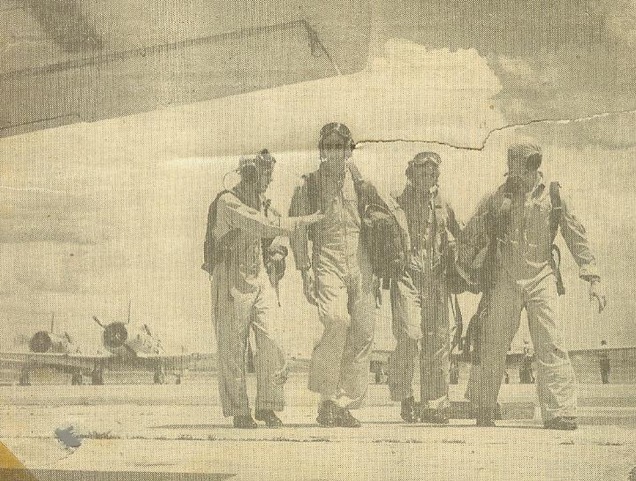
We graduated from “Boots” in early mid-September and were sent to the West Coast. Georgie and Bob were assigned to an aviation transport squadron near San Francisco and I went to the Utility Squadron (VU-3) at Miramar Naval Air Station near San Diego. It was quite an experience for a country boy. When they told me I would have to get in an F6F Hellcat fighter plane and warm it up for its pilot every morning I was scared to death. I was only at Miramar for about a month and I never did get used to starting those planes.
In October, I was sent to The Naval Auxiliary Air Station in El Centro, California, to attend a Target Drone school. These were the forerunners of the drones that are being used now. I completed that school and was sent to a Utility Squadron (VU-6) in Norfolk, VA. I stayed there until January 1953 when I was accepted to Naval Flight Training.
Flight training for me was a big mistake. I didn’t really have a great ambition to fly, I just wanted to do something different. I got through all of the basic training just fine but was very uncomfortable when I got to actual flight training. After about 3 or 4 weeks, I requested to be dropped from the program. If I hadn’t gone to flight school I probably would have made a career of the Navy. As it was, I had to finish out 15 more months at the Naval Air Station in Jacksonville, FL, and then was discharged in September 1954.
POST-DISCHARGE, BACK TO VERMONT
After a brief stint working at Sikorsky Helicopters in Connecticut, I returned to Vermont and went to work for the Air Force as a civilian jet mechanic. I also joined the Vermont Air National Guard and remained a member until I graduated from college.
I entered the University of Vermont in Burlington in September 1955. Shortly afterwards, I met Corrine Savage and we were married the following year. Our first child, Cathy Jean, was born on October 24, 1956, when I was a junior. I graduated in 1959 with a degree in Industrial Management and an offer from the General Electric Company to join their Manufacturing Training Program (MTP) for the huge sum of $508 a month.
The GE MTP program was a three-year program that involved working in six 6-month assignments. It also required moving to a different plant location every year and trainees had to go to specialized manufacturing and business classes two evenings a week for the entire three years. It was a great education and was the equivalent of having a master degree in manufacturing when you graduated.
My assignments were at Large Steam Turbine and Generator in Schenectady, New York, (where Judy Ann was born on Nov. 6. 1959); Knolls Atomic Power Lab also in Schenectady; Automatic Blanket & Fan in Bridgeport, Connecticut, and Light Military Electronics in Johnson City, New York. When I graduated from the MTP Program, I accepted an offer to stay in Johnson City. I was a Manager of Manufacturing Planning and the Manager of Special Projects and Quality Control for the next two years.
I will note here that there was one aspect of the MTP program that was rather unusual. Every trainee had to take a three-day test series known as the Miller Test. I don’t remember a lot about it but I do recall one of the characteristics that the test showed for me. That was that I would tend to be quite harsh in supervising employees. I thought that was ridiculous. I thought of myself as Mr. Nice Guy. However, throughout my career, I kept seeing that trait come out. Some people who worked for me and whom I thought of as good people and hard workers couldn’t stand me. I never figured that out to this day.
GOING DOWN TO ARIZONA
My boss in Johnson City transferred to GE’s Computer Department in Phoenix, Arizona, and started bugging me to go there. I transferred there in the fall of 1964 and the following year, we moved into our new house next to what is now Piestawa Peak Park. Corrine lived there until she passed away in 2007. Judy still owns that house.
After I was with GE in Phoenix for a couple of years, I joined some other guys who were leaving to start a new computer peripheral equipment company. That company was underfunded as were two others that I joined. I had two more jobs and then moved to Alaska in 1975.
Shortly after I left GE, another former GEer asked if I wanted to go to an exercise class at the Phoenix downtown YMCA. I went with him and at the end of the class, the instructor said we would now run a half mile. My first thought was “No way can I run a half mile” and my second thought was that I didn’t want to admit it. Right there I realized I had done very little in the way of exercise and that I should be doing more.
It wasn’t long before I was running a mile and then two. One of the guys, in the class Charlie Rigden, suggested I join him and some others in a weekly Saturday morning climb up Squaw Peak. After a month or so of that, he told me about a rock-climbing class that was being put on by the Arizona Mountaineering Club (AMC). Soon, I completed the class and became active in a lot of the AMC activities. Corrine, Cathy Jean and Judy also completed the class.
In 1971, Charlie made an attempt to climb Mt. McKinley (now Denali). Bad weather kept them from getting to the summit but he was determined to get another group together to try it again in 1973. That sounded exciting to me so I signed up. In the meantime, Charlie had moved to Anchorage so I and 6 other AMC members headed to Alaska in June of 1973. Seven made it to the top but another guy and I had to back down for health reasons. Although I didn’t make it to the top of McKinley, I fell in love with Alaska and vowed to move there. Because of that and other reasons, Corrine and I separated, and I made the move in July 1975.
ALASKA BOUND
Moving to Alaska should have been an easy choice for me but three weeks before I was to leave, I got an offer to go back with GE for a high paying job in Puerto Rico. It was a terrific job but after waffling for a while, I decided to go to Alaska and have never been sorry.
When I first got to Anchorage, I worked for Charlie as an assistant controller (accountant) in a large school bus company. The company got bought out by a national firm (ARA Services, Inc.), Charlie left for another job and I ended up running ARA’s Alaska Division. It was a good job but it was in the Prudhoe Bay/Alaska Pipeline days and I got an itch to go to the Arctic. I talked myself into a Senior Camp Supervisor job and did that for three years working one week on-one week off.
Stepping back a bit, I should mention that when I got involved with the AMC group, I started drinking a lot of beer on a regular basis. That drinking got heavier in Alaska and when I was home in Anchorage from the North Slope every other week, I would spend a lot of time in my favorite bar, The Irish Setter.
I should also say that I met and married Nancy Bodwell a couple of months after I arrived in Alaska.
A STOP IN HAWAII
When I was working for BP, I got one good promotion but was passed over for another that I thought I was the best qualified for. The guy that got it, Tinker Childress, died about 6 months after he was promoted. Anyway, I was on my week off in Anchorage on a cold wet day when I got a call from my old boss at ARA. He wanted to know if I was interested in in being the Vice President/General Manager of their Hawaii Division. As much as I loved Alaska, that offer sounded too good to pass up so Nancy and I went to Honolulu for a round of interviews.
I accepted the Hawaii job which was Ok but not as interesting as working on the Slope. After about 15 months, I told the president of the parent company that I wanted to return to Alaska. It took them 4 months to find a replacement but I went “home” in April 1982. Nancy had gone back 4 months earlier to take a job with her former employer, the NBC TV station in Anchorage.
I got a job as General Manager of an Alaska native-owned company called Pingo (Pingo means “small mountain” in the Inupiaq language). The president of the company was Thomas Napagiak, a jolly, excitable Eskimo. I stayed with them as an employee for almost a year and another year as a consultant. At the same time, I was a full-time consultant for Piquniq Management Corporation (PMC). I soon became an employee and was the CEO by the time I left in 1993. I consulted with PMC and a couple of smaller companies for another year.
In 1983, while I was still consulting for PMC, my son Dan was born. He came into this world at 11 pounds 6 ounces.
I was still drinking pretty heavily and, although I had a very young son, decided to get divorced from Nancy. It was definitely very selfish on my part but I find a small consolation in the fact that I supported him very well until he came to live with me in Haines at age 16. He also spent every other weekend with me while he was living in Anchorage. When Dan was 2-years-old, Nancy, who had remarried, moved to Medford, Oregon. Dan spent every summer and every other Christmas with me. Nancy’s new husband, Mark DuMond, was an outstanding stepfather to Dan and, although Mark and Nancy divorced, Mark and Dan have remained very close to this day.
A PROGRAM FOR LIVING
When I was drinking heavily, I used to run with a guy named Abraham Lincoln Wilson III. Abe was a bartender at The Irish Setter in Anchorage. He was very good natured and one of the last true gentleman when it came to the ladies. I had been good friends with his brother Jon since I arrived in Alaska. We used to play golf together but neither of us was very good.
One day in the summer of 1985 I noticed that Abe was in an exceptionally good mood at the Setter. I commented on it and asked what was the cause. He replied “I’ve found a program for living.” Something caused me to take special notice of that statement and I asked him what he meant. He said he had joined AA. At first I thought he was joking but he wasn’t. I inquired a little bit about it and then asked if they ever let non-alcoholics visit those meetings. He smiled and said he thought they might allow me to sit in on a meeting or two.
A couple of days later, Abe took me to my first AA meeting as a “visitor.” It was upstairs in a building on Blueberry Street in mid-town Anchorage. The name of the group was “Lost and Found.” I kind of felt that described me. After a few days, I attended some meetings on my own and somewhat halfheartedly “joined” AA.
I should mention here that AA or Alcoholics Anonymous takes the anonymous part pretty seriously. AA traditions strongly suggest that members be known only by their first name and last initial in the area of “… press, radio, and films.” By writing about my experiences in this autobiography, I could be properly accused of violating the tradition of anonymity. In my defense, I am writing this autobiography for my relatives who already know of my long-time association with AA but I realize that others might read it as well. In what I consider the unlikely event of me taking up drinking again, some might think that would be a failure of AA. That would be nonsense! It would be my failure and mine alone.
So, from the previous paragraph one might think that I took to AA like a duck to water and never drank again. Wrong! I screwed around with the AA program for two years before I finally had my last drink (so far) on June 25, 1987. I left half of a Budweiser on the bar at the Setter on that day. I went back to see friends occasionally but I didn’t think it would be a good idea to spend too much time there.
Abe left the bar business and eventually became a car salesman at Anchorage Chrysler, working for one of his old customers. That man soon sobered up and, as far as I know, stayed that way. Many of Abe’s old customers, including me, bought cars from Abe. Unfortunately he contracted esophageal cancer and passed away in 1995.
MEETING PAULINE

In 1988, about 7 months after I had gotten sober, I was invited to Robert’s 5th birthday party by a family friend. Robert was the son of a close friend of mine at the time and Pauline, who was Robert’s grandmother, was there. I had meet her previously when she needed help with her luggage at the Anchorage airport.
At the party she was obviously “under the influence” but not drunk. I pulled her aside and told her that I had gotten sober and would be glad to help her if she was interested. I told her I had extra bedrooms in my place and she would have a safe place to start on the road to sobriety. But she said no, she would be OK.
The next afternoon, she called me and asked if I was serious about helping her. I said yes and that I would go to her daughter Betty’s place to pick her up. All she had to her name was a medium sized suitcase and a plastic bag with some clothes in it.
She didn’t need anything else. From that day on she and I built a beautiful life together with what we had. We married and were able to enjoy the next few decades trying new things, traveling, and taking care of each other.
JAUNT TO JUNEAU
In 1994, after my contract with PMC was up, I was approached by the Leo Barlow, the CEO of Sealaska Corporation and Alan Williams, the Chairman of Sealaska Corporation, the regional corporation for Southeast Alaska. They knew about me from my work at PMC as well as the fact that I was married to a Sealaska shareholder. They asked if I would be interested in consulting with Sealaska. I said I would and, a couple of months later, Leo asked me to come to Juneau, the Sealaska headquarters, to talk about specifics of the Sealaska contract.
When I got to Juneau I again met with Leo and Alan. They described some general business development tasks and then talked about Sealaska’s Executive Vice President, Bob Loescher. The essence of that part of the conversation was that they did not want Loescher to control my work. They said he might not be receptive to my being there but that I should not be concerned about his attitude. I said I could work with that but it came back to haunt me later.
CORPORATE BATTLES
After consulting full time for three or four months and commuting back and forth to my home and Pauline, I suggested to Leo that we’d be better off if I came on board as an employee. He agreed, brought it before the board of directors, and I was hired as Vice President of Business Development.
My first assignment in my new job was to find a company that Sealaska could invest in. I started on that task and kept Leo informed of what I was doing but Loescher was pissed because he wasn’t involved. I hadn’t been with Sealaska for more than a few months before Loescher got two other corporate officers to join him in writing a letter to Leo saying they didn’t think I was doing a good job. Loescher even scheduled a meeting of managers in Seattle to review my work. Alan Williams found out about it and showed up at the meeting. He had me give a presentation to explain what I was doing and then praised it afterwards. Of course all of the other managers agreed with the Chairman of the Board. Loescher was furious but had to temporarily back off.
Several months later, Loescher made another run at me. He proposed that my work be done by a management acquisition team with him and my other two detractors as part of the team. Leo Barlow, who I was learning had no stomach for controversy, agreed. In reality, it didn’t change what I was doing much but it concerned me that Leo gave in so easily to a man he supervised.
Two years after I joined Sealaska, Leo Barlow resigned and, what do you know, Bob Loescher was named president. The job was misery for the next two years but I did get to move temporarily to Vancouver, Washington, for eight or so months. Vancouver was very nice but I was working for a guy that thought I was Loescher’s spy so it was like being an overpaid clerk until I retired with exactly four years of service. That was important because it made me eligible for a vested retirement fund. Also, Sealaska moved me back to Haines, Alaska.
FINALLY RETIRED AND ON THE ROAD
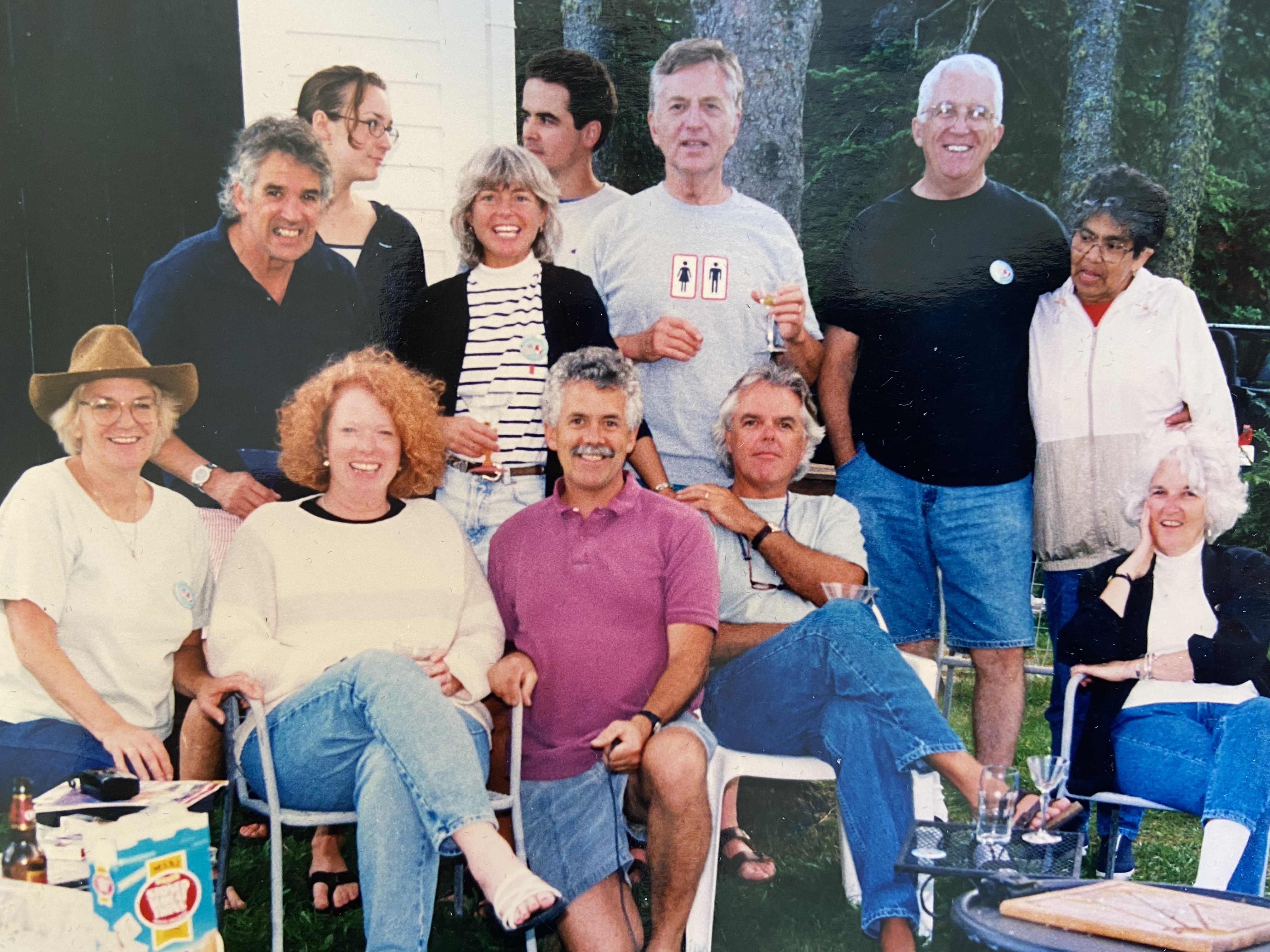
Right after the retirement, Pauline and I bought a 35-foot Bounder motor home and took a roundabout, 12,000 mile trip to the East Coast. On our travels, we visited Judy, Doc, and Mary in Arizona; Paul Lavertu and Nancy Brochu in Kentucky; Yvonne in D.C.; Mary Ellen in Connecticut; Linda and Bob in Vermont; Pete and Taffy in New Hampshire; John Rowell in Hardwick; and Jean’s family in Casper, Wyoming. Then we headed for our retirement home in Haines.
When we got to Haines, there a bunch of Pauline’s friends in the house drinking beer and shooting the breeze. Pauline cleared them out and told them the house was a booze free zone from that moment on. They cleared out of there in about two minutes.
The way the house got to be ours is worth mentioning. Pauline’s mom, Grandma Daisy, had lived in the house since it was built in 1972. It was a rent-to-own contract and she had been making payments of $150 a month or so for about 15 years. When Pauline and I got together, we made the house payments for Grandma until she died in 1993. Paulie (my nickname for Pauline) and Johnnie continued to live in the house and I assumed they were making the payments after Grandma passed.
In 1996, Nancy asked Pauline and I to help make up some delinquent house payments. When we asked how much was overdue she told us no payments at all had been made and Paulie was being threatened with eviction. Nancy had made several payments but couldn’t afford to keep doing it. We told her we would make up all delinquent payments and give Johnnie the right to live in the house for the rest of his life if we could buy the house. We did that and the house became ours.
Pauline was never really happy about living in Haines again. She had some bad memories and they were magnified in her mind over the years. As an example, she said often that nobody in school liked her and had treated her badly. I was quite surprised to be looking through some old yearbooks and seeing her picture as a member of the pep squad. A number of people who had gone to school with her told me about how smart she was and that they had often copied her homework.
STICKING WITH THE PROGRAM
I became active in AA in Haines as soon as we got there. The meetings were not well attended and sometimes there was no one to open the doors of the old schoolhouse where we met. I got hold of a key and attended on a pretty regular basis. We seldom had more than five or six members attending and more than once it was just me. Part of the problem was the location which was a bear to get to in the winter.
In about 2001 we started having meetings in the Public Health Service conference room and that seemed to help. Over the years, we have grown to the point that a dozen or members attending is the norm. More importantly, we keep getting new members who have decided that drinking was kicking their butts and that is the whole point of the AA program.
Although AA is, as the name implies, an anonymous program, I have never kept my involvement a secret. This is so that anyone who wants to find out more about AA will know who to contact. I never had even the slightest problem in being accepted because of my AA affiliation. AA has always been important to me in Haines but it didn’t keep me very busy. I was only 66 when I got here and I was in pretty good physical condition. I needed a place to spend my energy. A part time job at the Sheldon Museum helped but then I read in the local paper that there was an opening on the City of Haines Planning Commission. I knew very little about what Planning Commissioners did but I applied to then Mayor Don Otis for an appointment.
A BUDDING POLITICAL FUTURE
I served on the Planning Commission for about a year when Linda Walker, a retiring City Council Woman suggested I run for the Council. It wasn’t something a lot of people wanted to do so, even though I had only been in Haines a couple of years, I ran unopposed and was soon seated.
I really enjoyed being on the Council. Many skills that I had learned in my business career could be put to use and I had plenty of time to dig in and find out more about the City of Haines and how it operated. I’d only been on the Council a short time when the voters of both the City and the Third Cass Borough of Haines approved a ballot measure to consolidate the two governments. The current mayors of both entities were running for mayor of the new Haines Borough but I decided to throw my hat in too. I won by a healthy margin so there didn’t need to be a runoff. In October of 2002, I became the Mayor of the consolidated Borough of Haines.
I hadn’t been mayor very long when Barb Stigen called Pauline the First Lady of Haines. Pauline really got a kick out of that and, for a while, was a little more accepting of Haines as her home. Another time she was asked, as the First Lady of Haines, to light the Christmas tree at the library.
A lot of people have asked me if I was barraged with complaints about Borough services. There does seem to be that perception about the downside of being a borough official. Actually, I did not get a lot of “bitching” but there was constant contact by people who wanted to be sure I understood their position and would do something about it. With very few exceptions people were very calm and polite. There were a few that came in looking for a fight but it almost always ended on a friendly note. I really liked being mayor and would have run again if people asked me to. Nobody did so I “retired” once again.
CARING FOR PAULINE
For most of the time we were in Haines, Pauline’s health was getting steadily worse. She kept getting sent to the native hospital in Sitka but wasn’t finding much help. On one of her visits, she contracted MRSA, a very serious staph infection that is almost impossible to cure. We were told that, from that time on, she should always go in the back door of the clinic in Haines to help prevent others from contracting MRSA. That went on for a couple of visits but then it was apparently inconvenient for the clinic staff so she became a front door customer again.
In 2006, Pauline was told that she had a dangerously low blood count. She was sent to Mt. Edgecumbe at least five times that year because of that. She received transfusions in September, October, December, and January of 2007. They still didn’t know what was causing the low blood count. On the last visit, they mentioned they were considering some sort of a blood tagging procedure that would have to be performed at the Alaska Native Medical Center in Anchorage. Why they didn’t consider this until after four transfusions is beyond me.
Pauline was in pain almost every day for the last five years of her life. She often said she didn’t want to go on living in that condition. The local doctors kept telling her she was taking too much pain medication. On the day she went into an irreversible coma, she was in exceptional pain. The physician’s assistant on duty recommended a shot of Demerol but her doctor would not approve it.
PAULINE PASSES
From Pauline’s obituary:
Haines resident Pauline Rose Case died Feb. 25, 2007, at Bartlett Regional Hospital in Juneau after a lengthy illness. She was 63.
She was born Jan. 16, 1944, in Haines, to Paul Eli and Daisy Phillips. She was of the Eagle Moiety, Wolf Clan and from the Gaaw Hit (Bell House) in Klukwan.
For many years, she was an administrative officer with the Bureau of Indian Affairs in Juneau and later in Anchorage. For the last 19 years, she was a homemaker and community volunteer.
She became the first lady of Haines when her husband, Mike, was the mayor from 2002 to 2005. She was the captain of the Yaan Waa Shaa and an active member of the Alaska Native Sisterhood Camp 5, as well as the American Legion Auxiliary Unit 12. She was proud to be an active member of Alcoholic Anonymous for the last 19 years and was a featured speaker at the 1990 International Convention of AA.
She was known for her sense humor, always playing jokes on anyone and everyone. She enjoyed sharing laughter with elders as well as her friends. Family members said she showed unconditional love for everyone she met.
She is survived by her husband; daughters, Judy Erickson, of Scottsdale, Ariz., Mary Marks, of Anchorage, Betty Martin, of Big Lake, and Bobbie Jo Phillips, of Haines; sons, Robert Martin, of Eugene, Ore., and Sgt. Daniel Case, of Fort Lewis, Wash.; adopted clan mother, Alice Johnnie, of Juneau; brothers, Paul, Fred, Eli, Howard and John Phillips, of Juneau, and Milton Phillips, of Anchorage; sisters, Flora Beierly, of Juneau, Vivian Taylor, of Anchorage, Nancy Phillips, of St. Marys; and many grandchildren, nieces and nephews.
Services will be held at 7 p.m. Thursday, March 1, at the Tlingit and Haida Community Center. Services will be held in Haines at a later date.
Pallbearers are Corey Bryant, Ken Williams, DJ Williams, Jim Marks, Norman Sarabia and Rick Hotch, Jr.
Honorary Pallbearers are Rep. Bill Thomas, Paul Marks, Raymond T. Dennis Jr., Charles Williams, Warren Taylor, Bob Beierly, Ernie Williams, Ruth Davis, Teddie Johnnie, Charlotte Katzeek, Melinda Phillips, Michelle Ford, Elizabeth Phillips, Cynthia and Janine Phillips, and Mike Kinsey.
FROM HAINES TO PALMER
After Pauline died, I lived in Haines until May 2020 when I moved into the VA-run Alaska Veterans and Pioneers Home in Palmer, Alaska. My last years in Haines were eventful and I tried to contribute where I could. I served as the Post Commander of the American Legion and on the board of the Haines Library which I think is the best small town library in the U.S.
In Palmer I’ve stayed social and enjoyed life. I didn’t snuggle up into a bug like some older people I know.
LAST STOP: JONES POINT
From Mike’s obituary in the Chilkat Valley News:
Former Mayor Mike Case, 90, died peacefully at the Alaska Veterans and Pioneers Home in Palmer on May 4.
The longtime community leader also served on the planning commission, the Haines City Council and the Haines Borough Assembly, as well as the boards of KHNS, Lynn Canal Counseling and the Friends of the Library. He was a member of the American Legion and active in the ANS/ANB as well as AA. Mostly though, people liked him. “Mike was one of the good ones,” Borough Clerk Alekka Fullerton said, echoing many residents this week.
In 2014 Case ran for office for the final time at age 81 and won a seat on the Haines Borough Assembly. He did not complete his term, choosing to resign over an assembly decision he disagreed with. He was on the Haines City Council prior to consolidation and elected borough Mayor when the city and borough consolidated in 2002.
During his final campaign Case told the Chilkat Valley News that resource development was a major issue for him. “Some people are worried there will be economic development at the expense of the environment or our small-town way of life, and those are legitimate concerns. So I want to help craft the code where it is necessary, so we do have good, responsible economic development,” he said.
Case was gentlemanly, convivial and an “organization man” who believed that the better part of government was getting things done.
“Mike was a true servant leader, always willing to lend an ear and hand and did so with all his heart,” said former Haines Borough Manager Robert Venables. He had a firm grasp of Robert’s Rules, ran meetings well, and tutored new assembly members on meeting etiquette.
Case was the last Mayor to paint the public safety building, in spite of its disrepair, and chose to match its colors with the library and administration building so residents could identify borough facilities and be proud of them.
Haines Borough Chief Financial Officer Jila Stuart said Case was her mentor.
“He was smart and observant, with a well-organized mind and good communication skills. His long career in the business world gave him keen insight about issues of finance and management,” she said.
When Case was Mayor, a manager died suddenly, and he asked a former City of Haines administrator, now Catholic Deacon Vince Hansen, to serve in the interim. Hansen had already declined several requests to return to the office.
“But given the circumstances, and my respect for Mike, I agreed. I always found him to be level headed and reasonable, even when things would get pretty irritating. He was the kind of person that took notice of people’s efforts, and was quick to make sure people had the full picture when evaluating things. His fair-mindedness came through in most everything he did,” Hansen said.
Case married Pauline Rose Phillips in 1988 and became a father to her two girls, Mary Ann Marks and Betty Alice Martin. He also became a doting grandfather in their extended tribal family. Pauline grew up in Haines, and after Case retired, they settled here in 1999. Case was supportive of his wife’s family and local ANS/ANB activities.
Case cared for his ailing wife for five years prior to her death in 2007. For her obituary he told the Chilkat Valley News they shared a passion for sobriety, and that as a featured speaker in many conferences, she was much more inspiring on the topic than he was.
Case penned his own obituary, leaving spaces to fill in the blanks for place and date of death. It began: “Michael V. Case was born to David and Alyce Case in Hartford, Connecticut, on April 7, 1933. That was the day beer became legal after Prohibition, and he often said the coincidence was prophetic. To the extent he grew up at all, it was in Vermont.”He attended elementary and high school in Hartwick, Vermont, leaving in 1950 to join the Navy.After his discharge in 1954 he attended the University of Vermont on the GI Bill. He married Corinne Savage in 1956. Cathy Jean Case was born the following year. He graduated from UVM in 1959 and joined the General Electric Company in Schenectady New York, where his second daughter, Judy Ann was born.
General Electric transferred him to Phoenix in 1964. He worked various manufacturing management positions and spent free time with the Arizona Mountaineering Club. He was on the mountain rescue team and taught rock climbing and first aid classes to club members. He attempted to climb Denali with The Road Runner McKinley Expedition and did not summit but did fall in love with Alaska.
He moved to Anchorage in 1975 and with the exception of 22 months working in Hawaii, remained in Alaska the rest of his life. He worked on the North Slope, for military base operations and for Native corporations.
In 1975 he married Nancy Bodwell. Their son Patrick Daniel was born in 1983. They divorced in 1985 and their son’s non-school time was spent with Case until he came to live with him in Haines in 1999.
In 1987 Case wrote that he “decided to investigate life without alcohol,” and joined a 12-Step program. He wanted to be sure his obituary noted that he was, “very active in the sobriety movement for the rest of his life.”
Pauline and Case’s oldest daughter, Cathy Dean, preceded him in death as did siblings Linda DuCharme, LM (Doc) Case, Peter Case and Mary Case.
He leaves children Judy Erickson of Scottsdale, Arizona, Mary Ann Marks of Juneau and Hoonah, Betty Martin of Haines and Dan Case of Spanaway, Washington; brothers Terry Case of Hollywood, Florida, and David (Taffy) Case Jr. of Freedom, New Hampshire, and many grandchildren and great-grandchildren.
His remains will be interred at Jones Point with Pauline’s.
Erickson says the best way to honor her father is, “help a friend or neighbor, donate to your local public radio, encourage a child, be like Mike – be a good person.
LETTER FROM A FRIEND
My dear Sandy,
[Editor’s note: This is a letter from John Holton, Mike’s life-long friend from Gibraltar, to Sandra “Sandy” Bliss who was a friend of Mike’s from the Alaska Veterans & Pioneers Home in Palmer, AK]
We cannot thank you enough for sending us the sad news about my dear friend Mike. Both Sandy and I were quite concerned about him during our last phone call which was not so very long ago as we felt sure that he was not at all well. I know that he has not had an easy time in recent years with failing health and his poor eyesight, a problem which we shared, and so in view of his advancing years and his poor health I can only be happy now that he is resting in peace.
Mike had been a very good friend of mine for many, many years, since 1983 to be exact, and he and I very much shared the same values and disciplines of life. He was a wonderful colleague of mine to work with when we were both managing the supply base at Kuparik. Not only did we have many hurdles to jump and many successes to rejoice in we always felt that between us we had done a jolly good job. One particularly wonderful memory of a task I remember doing together, was in 1985 when we needed a truck, a pickup truck, to be delivered from Anchorage to the base at Kuparik which was up near Barrow, in North Alaska. After investigating the best way to get this new vehicle to the base we decided that someone should drive it up the Ice Road and that someone happily turned out to be Mike and myself! We thought we would treat ourselves to the pleasure of driving that 600 or 700 miles up the gravel road which was indeed an incredible experience for both of us and one which neither of us ever forgot. The trip was a fantastic experience which involved us carrying 45 gallon drum of gas in the back of the truck and a couple of guns in case we were troubled by bears. We also had the opportunity to stay overnight at one of the BP pumping stations and to visit the one and only truck stop at Coldfoot which was halfway up the road. That road was extraordinarily dusty at that time of the year and the air was alive with massive mosquitoes. So that’s a memory I shall treasure and I know he would have as well.
Also please, if you have an opportunity, maybe you could pass on our condolences and sincere good wishes to Mike’s family with whom I feel quite familiar after all the things he told me about them but, unfortunately, I never had the pleasure of meeting them and neither did Sandy.
Thank you again and yours very sincerely,
John
 The True Gen