This blog hasn’t always been worth reading but it’s been worth keeping. I started it 10 years ago as a way to learn WordPress and help a family friend start an actual blog.
It’s now morphing into a repository for family history, housing a fun letter from my dad to his siblings that I’m calling Dear Clan and a 10,000 word autobiography written by my uncle titled An Exceptional Memory: The Autobiography of Mike Case.
Enjoy any and all pieces and if you spot any typos, errors or omissions, let me know at jameson.case@gmail.com.
Category: Writing
OK. So 2012 was a great year in the way that 2016 is not so wild for some of us that are into the rule of law, accepting all humans for who they are, the benefit of the doubt, maintaining a sustainable existence on this planet (which is the one we’re closest to and yes, that is science), and being basically decent to each other. (Speaking of science, Hawking says we’re doomed in about 30 generations.)
Back to the past: 2012 was also the last time that I posted to this blog which was a creative outlet for me in a crazy and wonderful time (2 year-old-boy, baby girl, nutty job, last quarter of grad school, my eye on the east coast the whole time). Aaaaaand we’re back… into a just as crazy time, but I won’t unpack that for you.
I will say that some crystallization of our thoughts will be helpful in the coming days, months, and years. The Internet could rightly say that a 40-year-old reviving his blog that only his most loyal family and friends read (past tense) is not the bulwark against fashy snakes that we need, but writing the occasional post is a proven method for getting good ideas off the ground (and letting bad ones lie). The motivational poster gets a bad rap, but the motivational lyric or line might make your day.
For me, as it was in 2012, The Roots offer the right motivation while I dust this thing off, and if I look familiar, I feel ya. Long time no see.
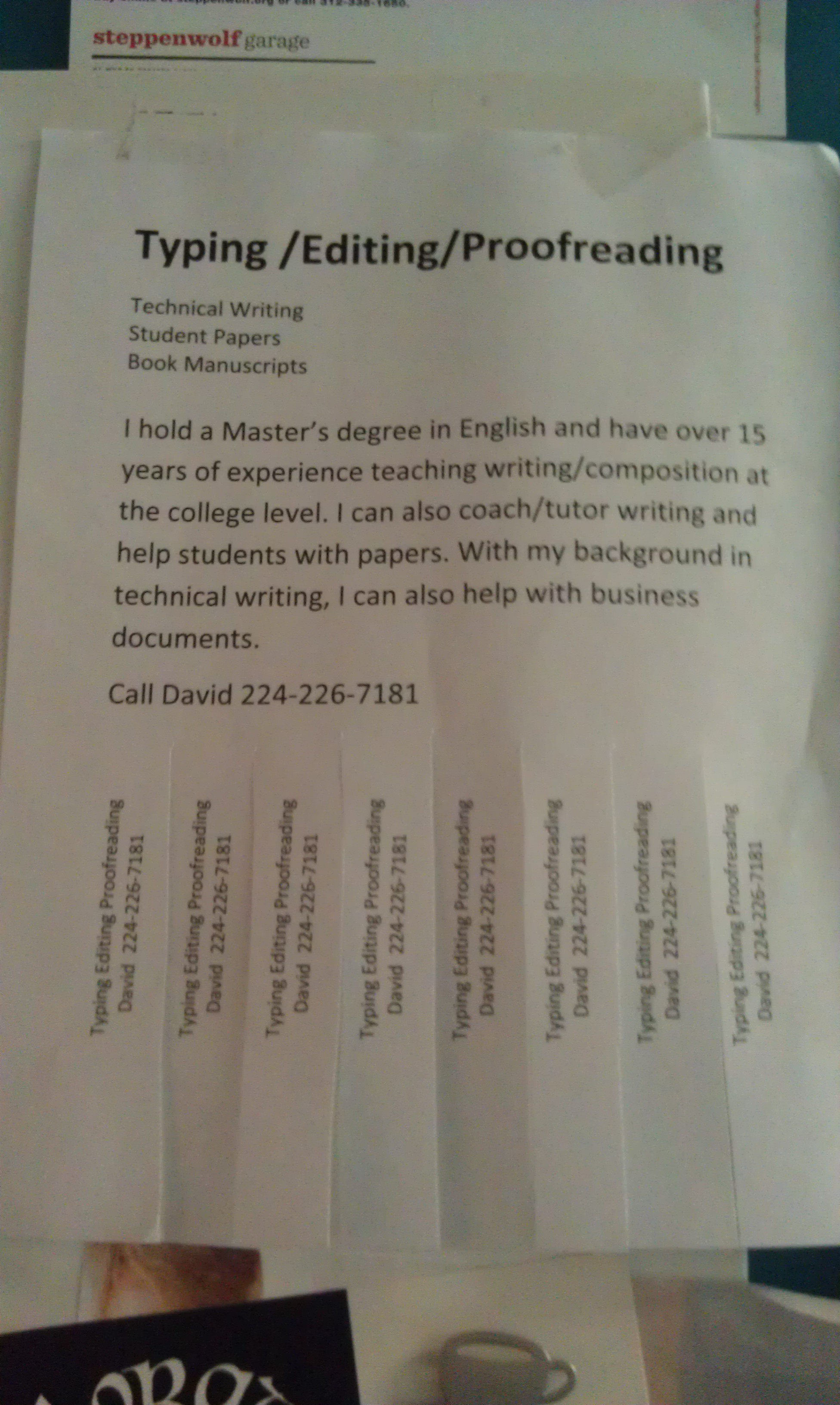
In the interest of helping out some Chicagoland writers and editors, I am passing on flyer information that I saw at a local coffee shop. Times are looking tight judging by the fact that no one has ripped the slips on these ads. Take a look and give them a call if you’re in the market!
As a side note, I think that the best spot for getting your content noticed might not be on a corkboard. This is the age of inbound marketing, and getting found is easier than ever. The best place to learn more about this is HubSpot’s blog.
The phone number is 847-869-6166.
Content creators, unite!
Guest post: Listening to the Dead
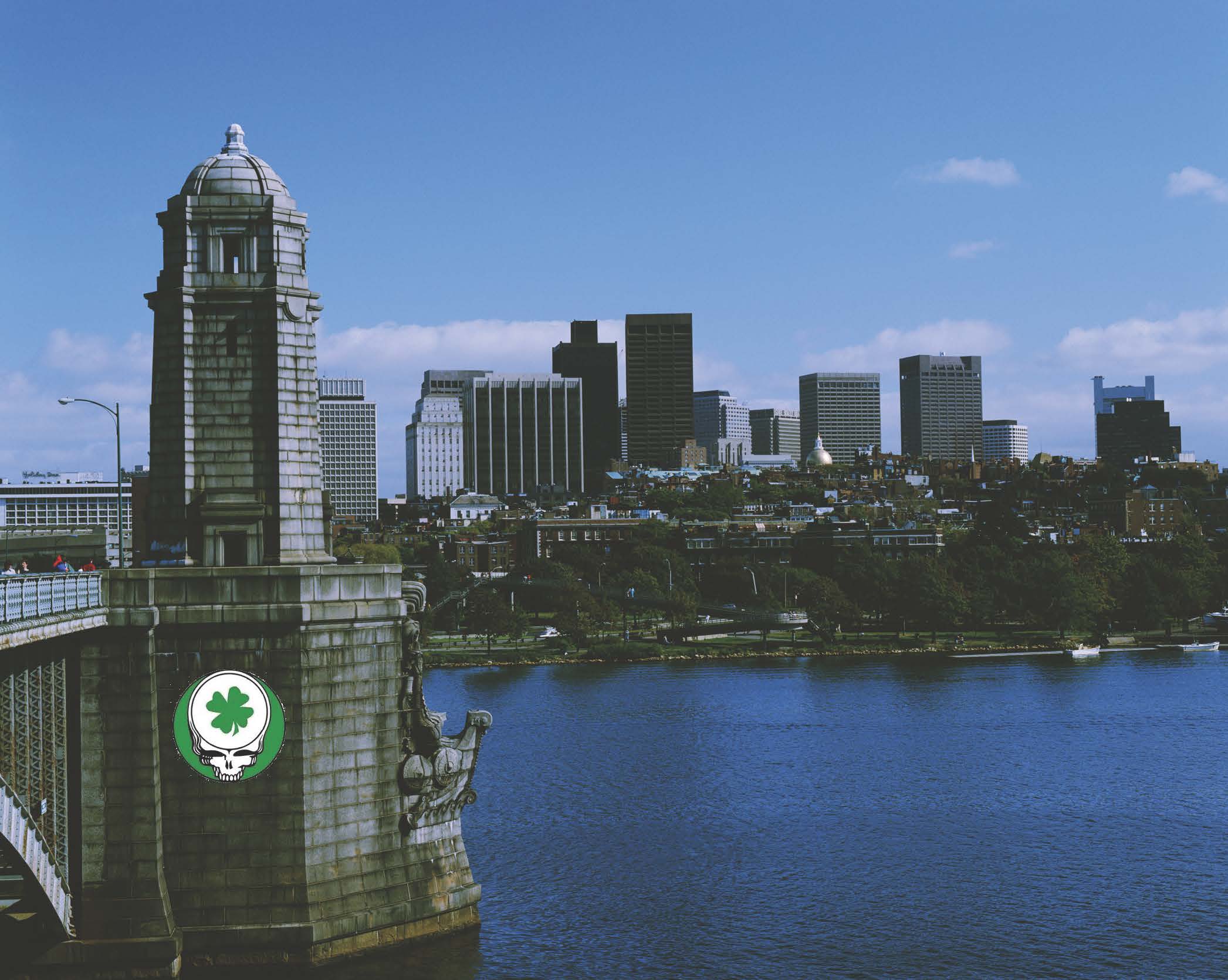
My high school friend held in highest regard, Ballardvale and Boston’s own Tim Gould, a.k.a. @therealtbg12, sent the email below to me as a follow-up to the delivery of a Grateful Dead bootleg. It must be shared (the music and what he wrote about it) now that I have permission. The > symbols refers to transitions between songs. If anyone wants the bootleg, DM me @JamesonCase.
From Tim:
Help on the Way > Slipknot > Franklin’s Tower: August 13, 1975 at the Great American Music Hall, San Francisco, Ca.
PARADISE AWAITS! Truly one of the all-time great openings to any Dead album for me. Sick intro from the legendary Bill Graham while each band member kicks in his or her part of the song after their name is announced. The sound on that recording is magnificent and while Help > Slip brings the juice, it’s the Franklin’s that really pays off for me (“If you get confused listen to the music play…”). Jerry, Bobby and Phil all weave through the jam on top of some serious rhythm from the 8-armed, 2-headed Hydra that is Mickey Hart and Bill Kreutzman!
Small fact about said drumming monster: Early in their career when the band was young and living together in The Haight, Billy and Mickey would tie themselves together and play a single set of drums so as to create chemistry and truly understand what the other one was doing. I think it worked…
Scarlet Begonias > Fire on the Mountain: May 8, 1977 at Barton Hall, Cornell University
The greatest show in Grateful Dead history? I say YES! Not the lengthiest but certainly one that came during their peak of 1977 which in itself was arguably their best year. And this Scarlet > Fire is generally considered the baseline for all Scarlet > Fires! Phil’s opening bass riffs are sonically supreme and, I have to say, unlike any other version I have ever heard. Truly mesmerizing. Throw in Jerry’s transition from Scarlet to Fire and it’s 20 minutes of pure mind-melting joy.
I have had the privilege of going to Barton Hall and it’s pretty neat. An old school gymnasium that looks like an aircraft hangar. Big, huge arched ceiling, pull-out stands, basketball court flooring and tons of space for sounds to bounce all around in there. 5/8/77 must have been a truly magical night and if anyone ever wants the complete show, I have it and will pass it along. It’s a must own for anyone even remotely interested in the Grateful Dead.
St. Stephen > The Eleven > Turn on Your Lovelight at Fillmore West, 1969
I mean come on! A ridiculous full length Stephen (with original ending) into possibly the most underrated GD jam ever! I am huge Eleven fan. Its bizarre timing and 11 count is amazing and Jerry rips through this underplayed number with the utmost fury. Somehow the boys manage to find their way out of the late 60s haze into a Lovelight that has it all! Pigpen rapping away, Bobby singing his back-up portions enthusiastically and perfectly, and Jerry, along with Phil, tearing the roof of the Fillmore West with a perfect blend of blues-driven rock mixed with psychedelic lunacy!
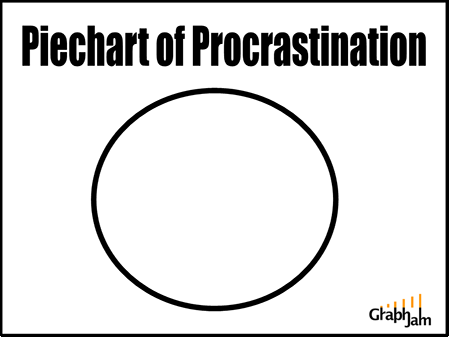
We like to think we know how to get things done here at The True Gen. Not true this December, as evidenced by the neither positive or negative number of blog posts so far this month (a roundabout way of saying zero).
I think the next editorial meeting may feature a slide with this graph on it:
Courtesy @DemetriMartin.
I cribbed this from multiple mentors, mostly Lynn Whittemore, a graphic design exec. who was equal parts creative and effective. The format came from a page on the George Mason Center for Leadership and Community Engagement website that is now gone, but the content needs to be preserved and used.
Rules for brainstorming
- No criticism, evaluation, judgment, or defense of ideas during the brainstorming session.
- No limit on “wild” ideas, no matter how outrageous or impractical they seem. Every idea is to be expressed.
- Quantity is more desirable than quality.
- “Piggybacking” (building on ideas—is encouraged).
- Everyone must be encouraged to participate.
Steps to finalizing ideas
- Record all ideas.
- Choose “top 5 ideas”—combine similar ideas when appropriate.
- Individually rank ideas.
- Decide, as a group, which idea will be enacted first.
- Begin the brainstorming process again as necessary.
Oh, boy: a blog post about blogging. We knew this day would come but not in the sixth post…
The good news is I will be brief and (ideally) helpful. Getting a blog going has been fun, but the actual work involved, the brain space required, and the teeth gnashing over grammatical mistakes has been a surprise (please post a comment when you find them, Dad).
To help keep things going I have two ideas on how to make the process a bit smoother:
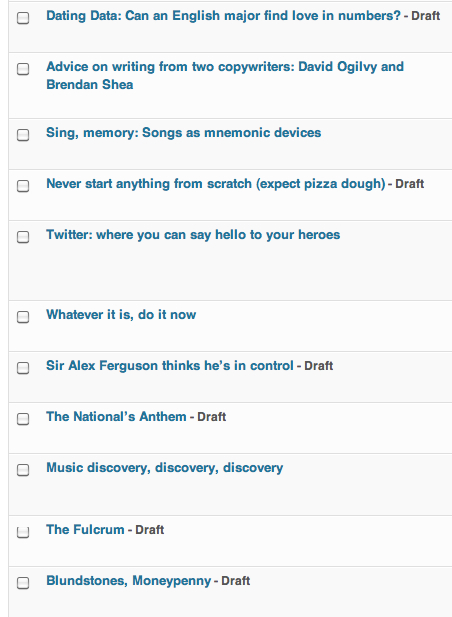
1. Fill your drafts folder with post ideas

Fight bloggers’ block by noting potential blog topics in your drafts folder. Throw in a headline and at least a few lines of body copy. When bloggers’ block strikes, hit the preview button for a particular topic, and you’ll see what it could look like published for all to see. It will be a little more motivating than something scrawled on a yellow sticky or floating next to your grocery list in an Evernote app.
2. Get thee a content calendar
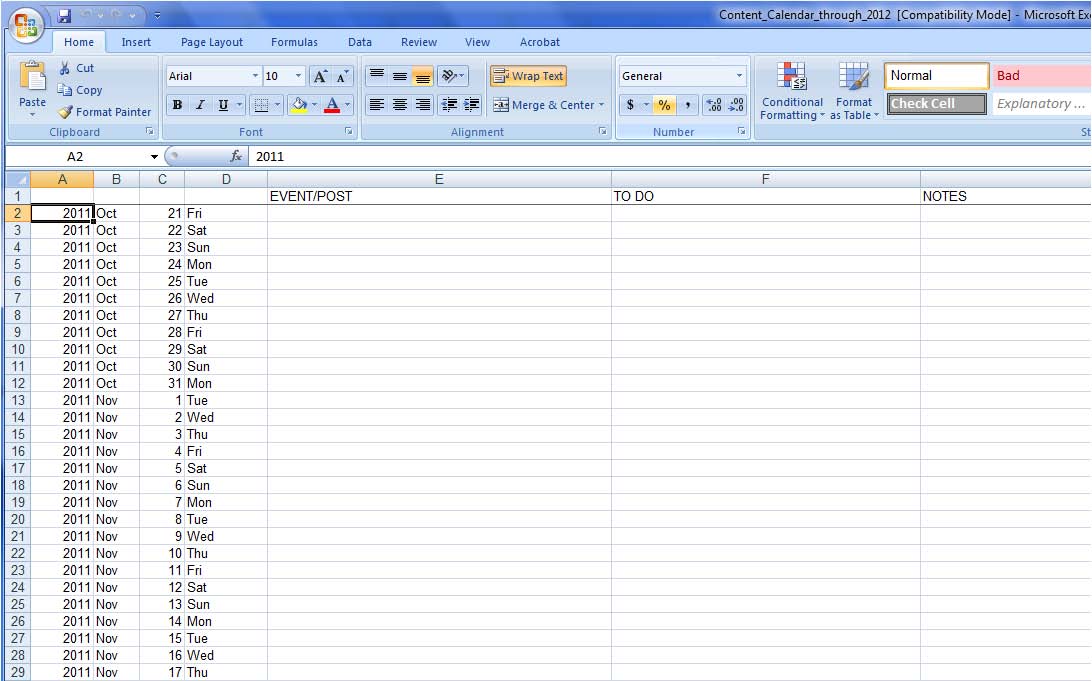
This covers some of the same ground in terms of capturing your ideas for posts, but gives you more of an overview of the content you want to create in down the road. I created one that goes through December 2012 in Google Docs that you can download as an Excel file. It’s very basic – take a peek:

A lot of the work in health content I do revolves around the National Health Observances. This can serve as your personal version of that: a collection of your own observances and rites that you want to share. A must have for all the Wiccan bloggers out there.
I’m new to this, so maybe these ideas aren’t new to you. Either way, please post any tips you’ve developed for putting the “ing” in blogging.
At the intersection of art and commerce is David Ogilvy, directing traffic, crafting copy, and turning phrases. In a bit of blasphemy for a wannabe marketer, I know very little about the man, other than he was/is known as the Steven P. Jobs of his industry, rewriting the rules of advertising as he went.
Copywriting was tip of Ogilvy’s spear – the fine point backed up by research and analysis that made a few words move a few million (dollars, units, people, what-have-you). I’ve made a living as an editor and writer, but I’ve never written copy, and who knows if I could have. Writing news stories and editing health content are broad brush strokes compared to the tatoo-ink precision required of penning ad copy.
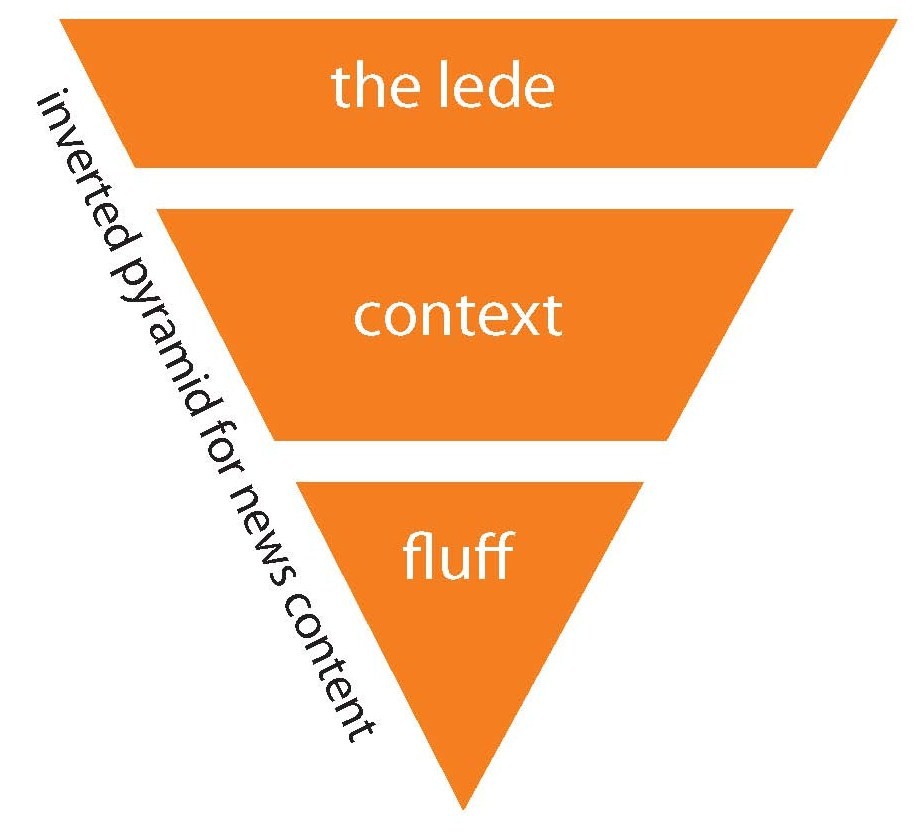
In journalism, the hoary format of the inverted pyramid applies even through the digitization of news: fill the top with the important stuff (the lede), and gradually taper down into the fluff. The fluff reads like a straight transcript of a reporter’s notes with no sense of an actual story being conveyed. It’s the journalistic equivalent of running out the clock. In contrast, an ad is read in a few ticks of the second hand.
In a quote collected for Good Advice on Writing, Ogilvy advocates for writers to:
“Avoid superlatives, generalizations, and platitudes. Be specific and factual. Be enthusiastic, friendly and memorable. Don’t be a bore. Tell the truth, but make the truth fascinating.”
I asked Brendan Shea, current Senior Copywriter at Loyola University Chicago and former copyeditor at Leo Burnett, if he agreed.
“It’s the classic point of view, but I have a slightly different philosophy,” said Brendan. As a fan of Ogilvy, Brendan can rattle off D.O.’s book titles and quote his maxims, but sees differences in how copywriters approach their words now. “Ogilvy also said, ‘the more you tell, the more you sell,’ but I don’t think that always applies today. The ads need to resonate fast.”
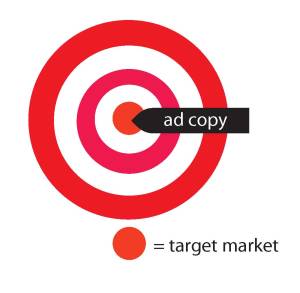
Brendan’s ads extolling the virtues of a Jesuit education are resonating all over the city on CTA properties — even wrapping a whole train for the “Enter One Way, Leave Another” campaign for Loyola. Brendan details a specific copywriting philosophy, and, with some advice for wannabe copywriters, he said, “Have a thick skin. You are going to write something that will be out there so you need to own it. You’ll do great stuff, and you’ll do terrible stuff. Either way, it’s going to produce a visceral reaction.”
He has personal proof of that reaction — one of his campaigns came up for discussion in one of his graduate school classes, and the feedback from at least one classmate was not positive. When his boss heard this, she told him he should have defended the piece, but Brendan wasn’t fazed. “I actually liked hearing what was said. It helps. You have to stop caring. Just listen and learn from people.”