Categories
New England Sports

Bye, bye blackbird: The Baltimore Ravens are about to tap on the wrong window

There may or may not be some New England Patriots fans who read this blog out of sheer pity for their state school English major friend (or son, as the case may be). But everybody, not just them, knows about the time when the wet blanket Red Sox had to face their fears and the New York Yankees in the 2004 American League Championship Series.

A friend of mine wanted the Sox to play the Twins that year in the ALCS. He’s a CPA, so rationality and calculation are hardwired. These are good qualities in a CPA, but they don’t apply when a reckoning is at hand; when a narrative arc needs to keep on rising. The Red Sox had to go through the Bronx to really win anything, to make the story what it was — if the Twins had beaten the Yankees and the Sox got past the Twins to beat the Cardinals, 2004 would not be the legend it is in Boston. The bully would’ve been back at school the next year.

The Patriots Get Haunted
Things are shaping up in a similar fashion for the Patriots this post-season. The Ravens are the team that took the Pat’s toy and threw it ’round the playground in 2009 playoffs, with a final score of 33-14. The Ravens were up 21-0 in the first quarter. It was the first playoff loss for the coach/QB unit of Bill Belichick and Tom Brady at home ever.

That was also the year that Wes Welker shredded his ACL in the final, meaningless game of the regular season, a loss against the Houston Texans. Losing to the Texans? Forgettable. The Pats were locked in as AFC Division Champs the week before. Losing Welker? Unthinkable. It meant that losing in the first round was a chilling possibility when you watched the Pat’s best short yardage weapon limp off the field.

Oh, Memorable Losses
None of the Patriot’s losses are as permanent as the one to the Giants in the 2007 season Super Bowl. This year, the chance to meet Eli Manning’s team in Indy would be irresistibly sweet to fans of either team. If the Giants pulled it off, they are giant killers, smacking the cocky Pats down once again. But if the Pats win, the 18-1 season ghost will vanish, and Tom Brady and the Patriots will chisel the final word in the monument to their ability as a football team.

The vengeance story line doesn’t feature the Giants yet. It’s the Ravens that Patriots fans feel hard done by. The Ravens are Johnny Ringo, surprised to see Doc Holliday ready to square off down at the oak grove. The Ravens are the team that didn’t have to face one of the best screen pass catchers who ever wore a mustache in 2009. The Ravens are the team that picked a fight against the stoic, beleaguered Patriots and won it.

A Baltimore lover of bad blood if there ever was one, Edgar Allen Poe was born in Boston but despised the city and it’s inhabitants. He adopted Maryland’s charming seaside town as his home, which led to delightful idea of naming a football team after Poe’s poem that details a man’s descent into madness over a lost lover.

A Reckoning is Nigh
In the NFL Network documentary, A Football Life: Bill Belichick, the coach laments early in the 2009 season that his only offensive weapons that year are the inimitable Randy Moss and Welker. He sees the limitations even before they are further limited by a ligament tear.

This season, the Patriots have multiple offensive options, moves and tactics that defy game planning by anything other than IBM’s Big Blue. Hernandez from the backfield or the strong side, BJGE up the middle, Welker on a screen pass, Branch on an out route, or Gronkowski anywhere the ball goes.

The 2011 Patriots team has been built to beat the Baltimore Ravens on Sunday. You can keep Ed Reed and Ed Poe.

Categories
Politics Sports

2012 events put doom (in sports and politics) on the calendar

Odd years tend to be odd, but 2011 was beyond strange. Protests, quakes, tsunamis, assassinations, wars beginning, wars ending, and Eurozones cracking.

2011 was like a day where you had nothing planned and craziness decided to fill your calendar for you. 2012 has got a little more structure to it, but that only makes it nuttier. Add all the Mayan calendar kerfuffle and it might be partly cloudy with a chance of doom all year.

Just like armies of old that used to have to wait for the spring offensive to get back on the battlefield, things don’t get going until May. I’ve got a preliminary list of the biggies here that I’d like to expand on with your help. Feel free to add omissions and predictions to the comments.

MAY
NATO summit – Chicago, May 15 – 22
G8 meeting – Chicago, May 19 – 20
The overlap between these two makes it like one big piece of cheese for occupiers of all stripes (not that any form of hierarchy is acceptable). Just remember that Chicago doesn’t handle dissent well.

JUNE
UEFA Euro 2012 Soccer Tournament – Friday, June 8 – Sunday, July 10 in Poland and Ukraine
This will be more fun than ever – a Greece vs. Germany final, please. @jimmywiky thinks that Greece might just drop the Euro currency altogether. Playing that big chip before the big tourney? Too much to ask for from a storyline standpoint. (Not so good from a global economic recovery standpoint though).

JULY
Volvo Ocean Race ends – Sunday, July 1 in Galway

Thanks for the heads up on this from @petertweeeter who treats this stuff like NASCAR.

Games of the XXX Olympiad (2012 Olympics) – London, July 27 – Aug. 12
English hand wringers will compete with London quibblers for the gold.

AUGUST
Republican National Convention – week of Aug. 27 in Tampa, Fla.
How could we make it hotter than this event in this week in this town? Everyone wears a trashbag?

SEPTEMBER
Democratic National Convention – week of Sept. 3 in Charlotte, N.C.
Boy howdy, it’s gonna get twangy down in North Cackalacky – them Dems love reminding Southerners where their political persuasions used to lie.

NOVEMBER
U.S. General Election – Tuesday, Nov. 6
The day the Internet will explode.

DECEMBER
Mesoamerican Long Count calendar ends – Thursday, Dec. 20
Start of the 14th b’ak’tun, 13.0.0.0.0 – Friday, Dec. 21
I’m going to wait to buy my Christmas presents this year.

Categories
#SM Process Work Writing

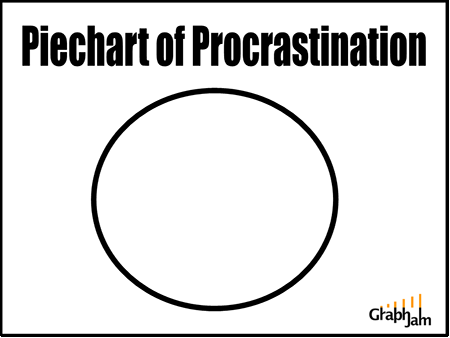
The effect of Christmas and midterms on blogging productivity (a pie chart)

We like to think we know how to get things done here at The True Gen. Not true this December, as evidenced by the neither positive or negative number of blog posts so far this month (a roundabout way of saying zero).

I think the next editorial meeting may feature a slide with this graph on it:

Courtesy @DemetriMartin.

Categories
Gear Work

A free standup desk to keep you upright for a few more days

It started with this study published by the American College of Sport Medicine that made an uncomfortable point: sitting for long periods erases the health gains of regular exercise. The researchers found “a dose-response association between sitting time and mortality from all causes and cardiovascular disease.” So, sit a lot and die (eventually).

Of course, no matter how you spend your days – upright, prone, sitting, ducking – we only have so many days. But to face the idea of having fewer of them because you sit a lot? That’s tough to take.

Sitting is not as benign as it looks. You can die from sitting still too long on a trans-Pacific flight. Deep vein thrombosis sets in when the blood pools up in the veins of your thighs. It clots, and the clot makes its way up to your heart and lungs when you get up to use the lavatory before your final descent into Shanghai.

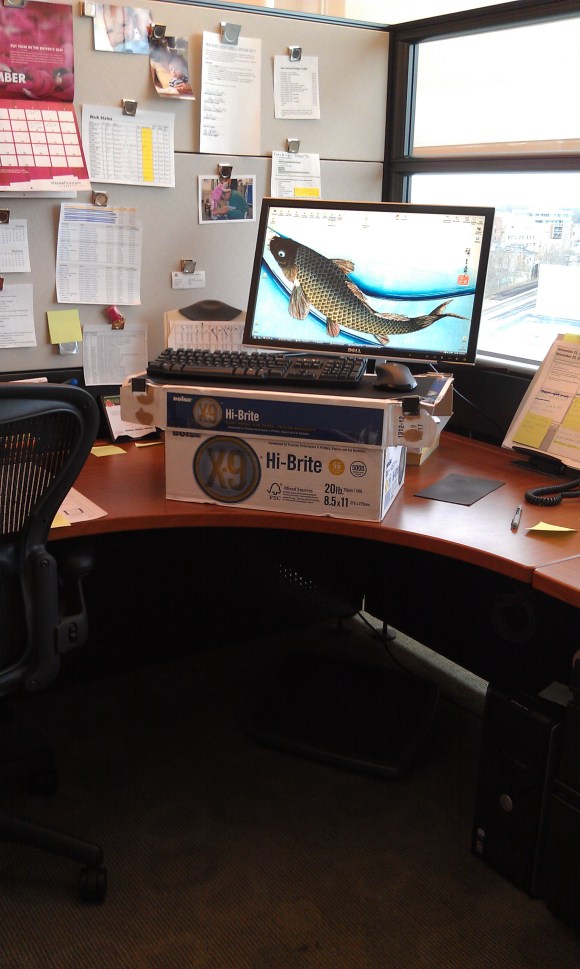
So if you’ve been sitting while spreadsheeting too much lately, throw a copypaper box up on your desk, prop up the ends, stand up and get back to work. Here’s my version of that:

IMAG0062 (1)

There’s a play-at-home version too next to my bureau using a combination of stackable furniture:

IMAG0044

The best part about any standup desk? It makes it very easy to walk away from the computer, which is better for anyone’s health.

Categories
Business Process Writing

Brainstorming: There are rules, people!

I cribbed this from multiple mentors, mostly Lynn Whittemore, a graphic design exec. who was equal parts creative and effective. The format came from a page on the George Mason Center for Leadership and Community Engagement website that is now gone, but the content needs to be preserved and used.

Rules for brainstorming

  • No criticism, evaluation, judgment, or defense of ideas during the brainstorming session.
  • No limit on “wild” ideas, no matter how outrageous or impractical they seem. Every idea is to be expressed.
  • Quantity is more desirable than quality.
  • “Piggybacking” (building on ideas—is encouraged).
  • Everyone must be encouraged to participate.

Steps to finalizing ideas

  1. Record all ideas.
  2. Choose “top 5 ideas”—combine similar ideas when appropriate.
  3. Individually rank ideas.
  4. Decide, as a group, which idea will be enacted first.
  5. Begin the brainstorming process again as necessary.
Categories
Process Uncategorized

Flow: A chart

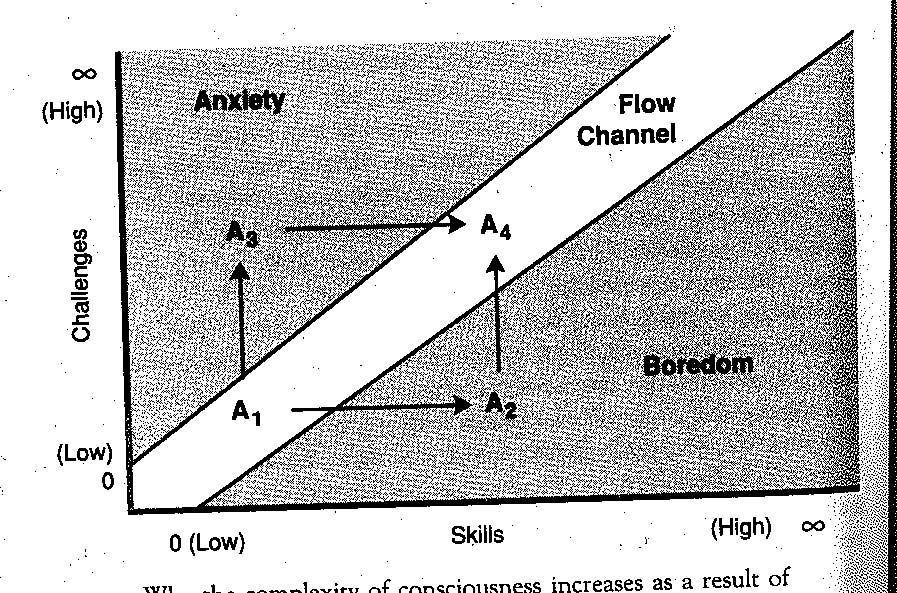
I’m a big fan of Mihály Csíkszentmihályi’s book, Flow. (Wikipedia tells me the name is pronounced mee-hy cheek-sent-mə-hy-ee.) Simplistically, it’s a psych book for people who already like life and want to get more out of it.

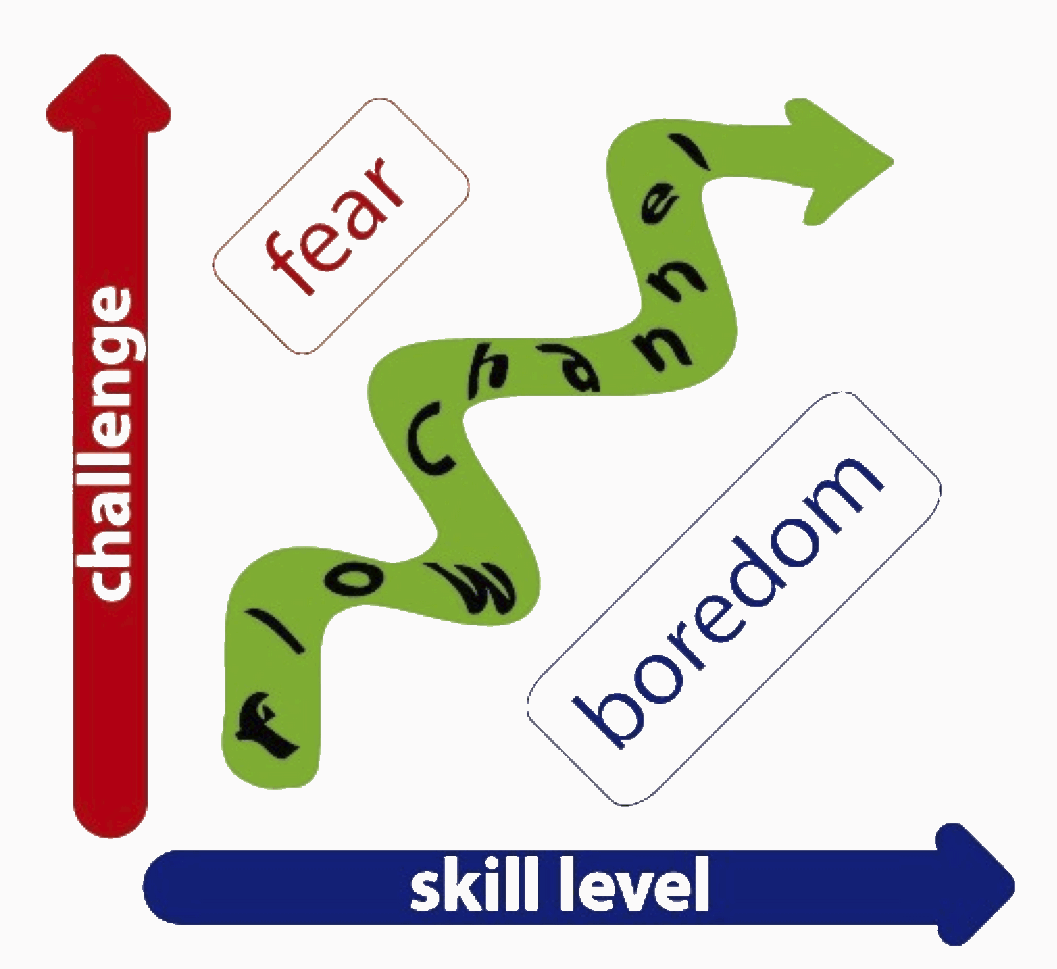
The idea is that to really get locked in to the task at hand, your skills need to be challenged at just the right level. Too much challenge and anxiety sets in. On the other side, if your skills are untested, you get bored.

Here is how M.C. represents it in the book:

For comprehension’s sake (my own), I simplified it a bit here:

Each time you get bored with what you’re doing, be it work, your golf game, the ski run you’re on, or what you’re reading, find a way to make it interesting again with a new challenge. Then, when you find yourself on the edge, figure out which skills or what kind of preparation can bring you back to the center.

Categories
Process Uncategorized Writing

A new blogger’s two best friends: the drafts folder and a content calendar

Oh, boy: a blog post about blogging. We knew this day would come but not in the sixth post…

The good news is I will be brief and (ideally) helpful. Getting a blog going has been fun, but the actual work involved, the brain space required, and the teeth gnashing over grammatical mistakes has been a surprise (please post a comment when you find them, Dad).

To help keep things going I have two ideas on how to make the process a bit smoother:

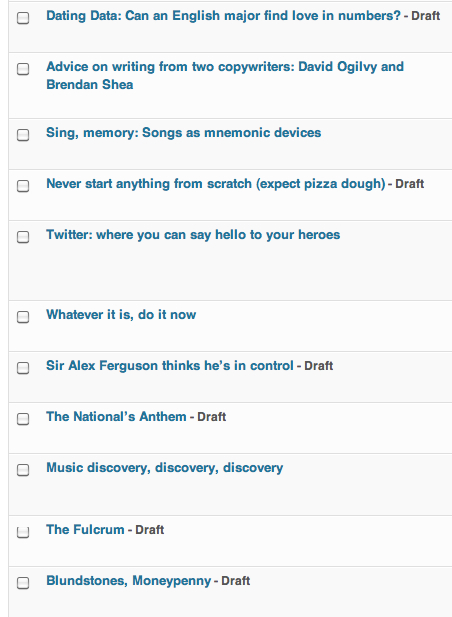
1. Fill your drafts folder with post ideas

Fight bloggers’ block by noting potential blog topics in your drafts folder. Throw in a headline and at least a few lines of body copy. When bloggers’ block strikes, hit the preview button for a particular topic, and you’ll see what it could look like published for all to see. It will be a little more motivating than something scrawled on a yellow sticky or floating next to your grocery list in an Evernote app.

2. Get thee a content calendar

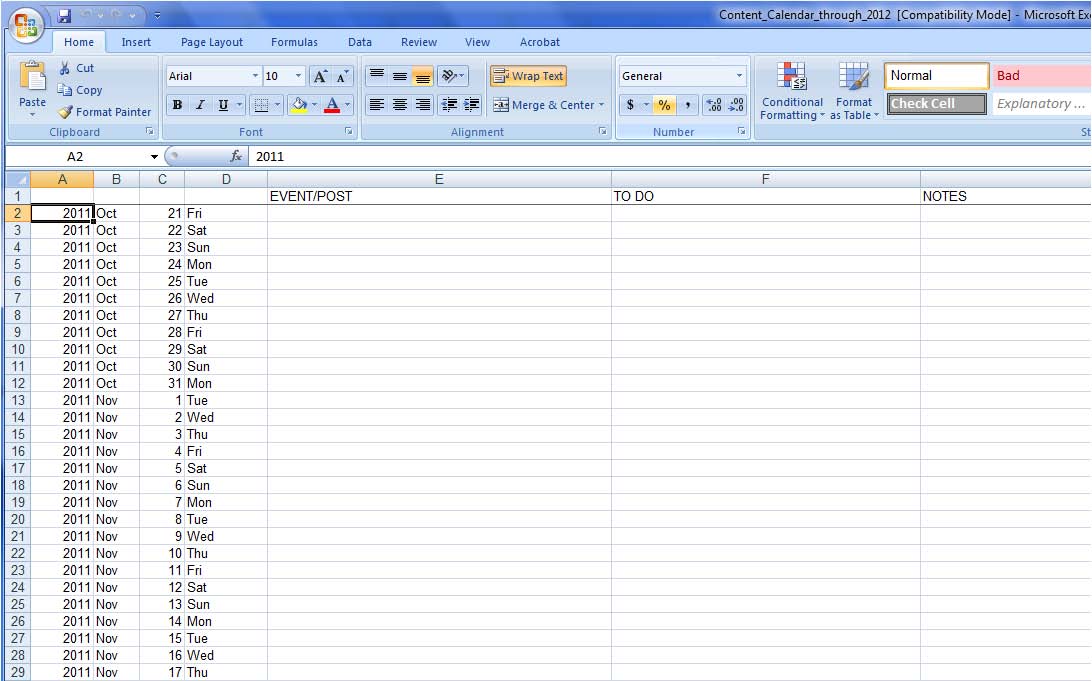
This covers some of the same ground in terms of capturing your ideas for posts, but gives you more of an overview of the content you want to create in down the road. I created one that goes through December 2012 in Google Docs that you can download as an Excel file. It’s very basic – take a peek:


A lot of the work in health content I do revolves around the National Health Observances. This can serve as your personal version of that: a collection of your own observances and rites that you want to share. A must have for all the Wiccan bloggers out there.

I’m new to this, so maybe these ideas aren’t new to you. Either way, please post any tips you’ve developed for putting the “ing” in blogging.

Categories
Business Process Writing

Advice on writing from two copywriters: David Ogilvy and Brendan Shea

At the intersection of art and commerce is David Ogilvy, directing traffic, crafting copy, and turning phrases. In a bit of blasphemy for a wannabe marketer, I know very little about the man, other than he was/is known as the Steven P. Jobs of his industry, rewriting the rules of advertising as he went.

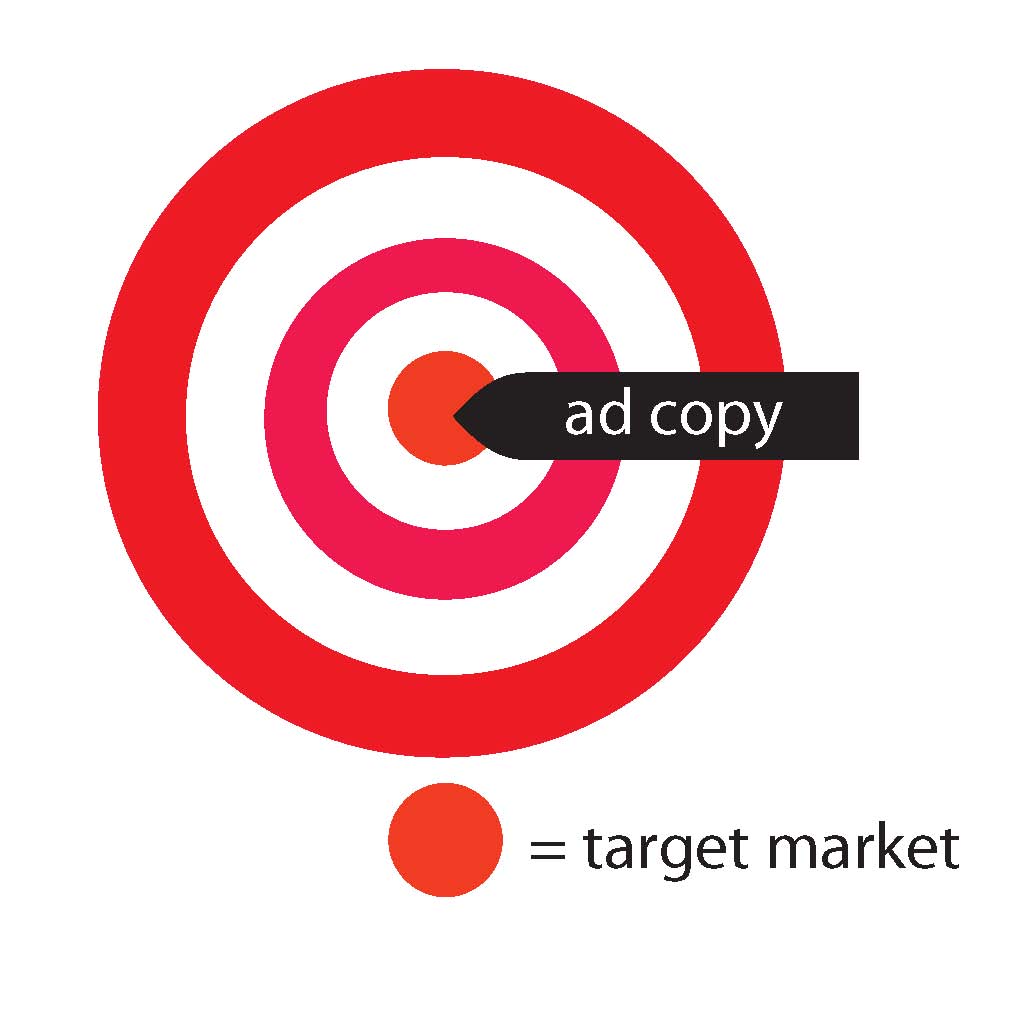
Copywriting was tip of Ogilvy’s spear – the fine point backed up by research and analysis that made a few words move a few million (dollars, units, people, what-have-you). I’ve made a living as an editor and writer, but I’ve never written copy, and who knows if I could have. Writing news stories and editing health content are broad brush strokes compared to the tatoo-ink precision required of penning ad copy.

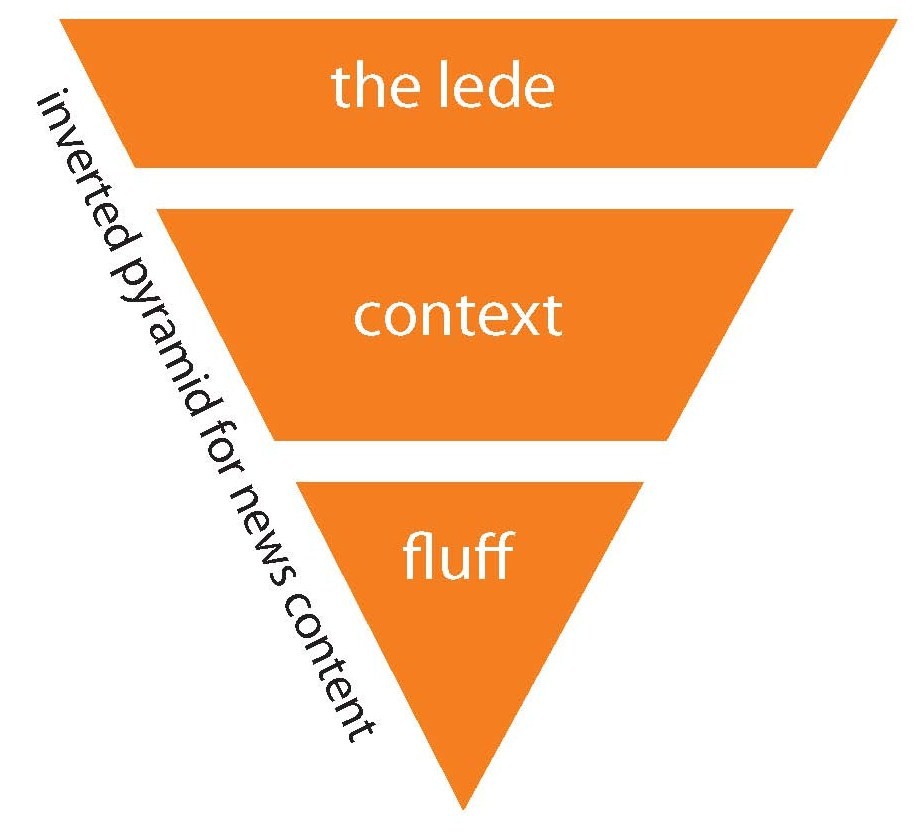
In journalism, the hoary format of the inverted pyramid applies even through the digitization of news: fill the top with the important stuff (the lede), and gradually taper down into the fluff. The fluff reads like a straight transcript of a reporter’s notes with no sense of an actual story being conveyed. It’s the journalistic equivalent of running out the clock. In contrast, an ad is read in a few ticks of the second hand.


In a quote collected for Good Advice on Writing, Ogilvy advocates for writers to:

“Avoid superlatives, generalizations, and platitudes. Be specific and factual. Be enthusiastic, friendly and memorable. Don’t be a bore. Tell the truth, but make the truth fascinating.”

I asked Brendan Shea, current Senior Copywriter at Loyola University Chicago and former copyeditor at Leo Burnett, if he agreed.

“It’s the classic point of view, but I have a slightly different philosophy,” said Brendan. As a fan of Ogilvy, Brendan can rattle off D.O.’s book titles and quote his maxims, but sees differences in how copywriters approach their words now. “Ogilvy also said, ‘the more you tell, the more you sell,’ but I don’t think that always applies today. The ads need to resonate fast.”

Brendan’s ads extolling the virtues of a Jesuit education are resonating all over the city on CTA properties — even wrapping a whole train for the “Enter One Way, Leave Another” campaign for Loyola. Brendan details a specific copywriting philosophy, and, with some advice for wannabe copywriters, he said, “Have a thick skin. You are going to write something that will be out there so you need to own it. You’ll do great stuff, and you’ll do terrible stuff. Either way, it’s going to produce a visceral reaction.”

He has personal proof of that reaction — one of his campaigns came up for discussion in one of his graduate school classes, and the feedback from at least one classmate was not positive. When his boss heard this, she told him he should have defended the piece, but Brendan wasn’t fazed. “I actually liked hearing what was said. It helps. You have to stop caring. Just listen and learn from people.”

Categories
Music

Sing, memory: Songs as mnemonic devices

Nevermind‘s 20th anniversary a few weeks ago led to as much Gen X nostalgia as I’ve seen in a while, but it didn’t feel overdone. If anything the real nostalgia was for moments when one album could signal a change in the order of things. People talked about or at least remembered where they were that fall in 1991 (and when they heard the hidden track).

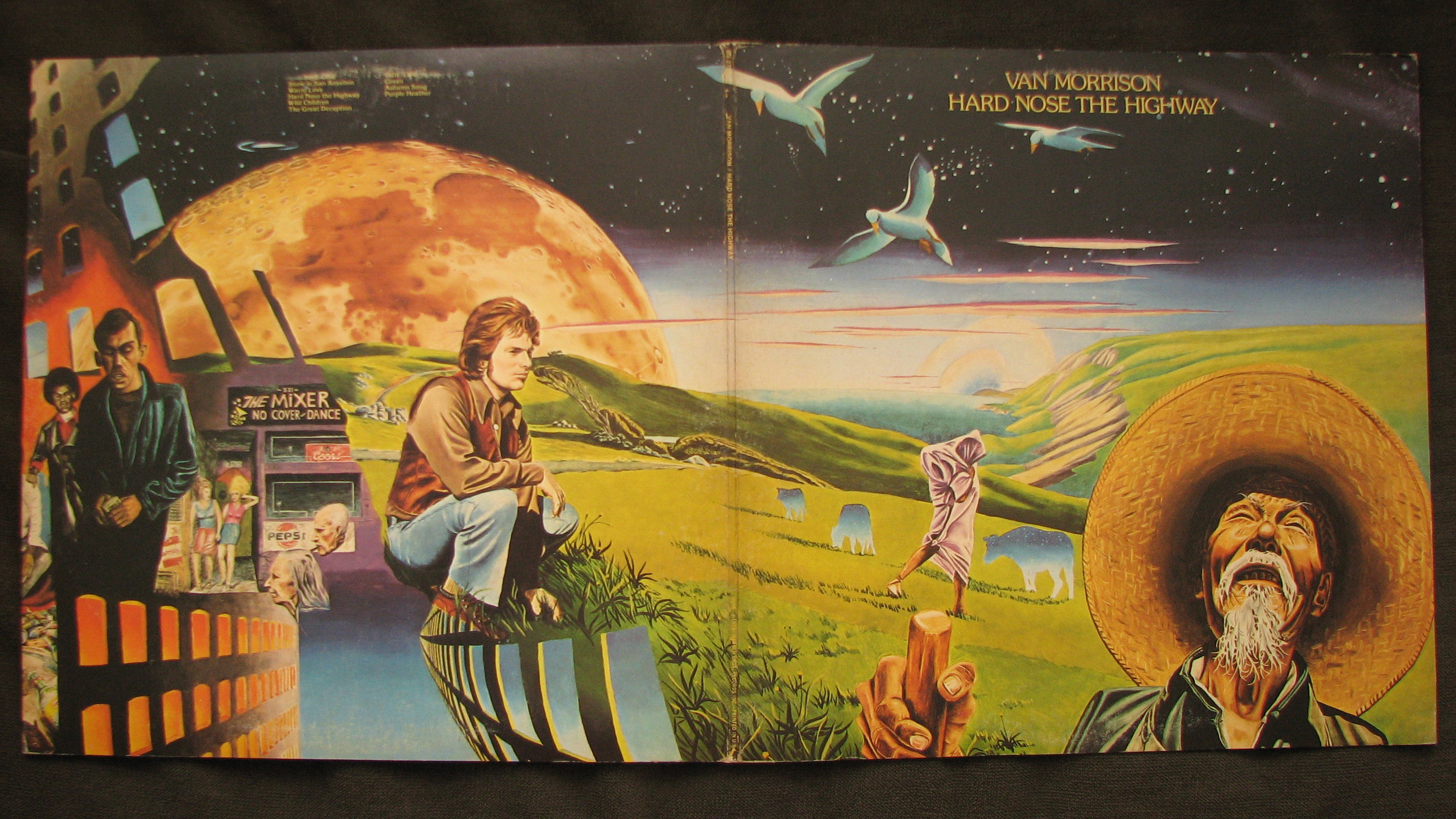
Another album released around the start of the school year, but 18 years earlier in 1973, sets up my annual fall nostalgia trip: Van Morrison’s Hard Nose the Highway and the second to last track, “Autumn Song.” It’s eight minutes that sounds like the end of September and grounds the listener to this fleeting season.

It’s a trick — my way of forcing my brain to stay still for a bit and prevent me from being surprised when fall is over. Picking a single track to associate with a certain time or event is not uncommon — a wedding song for instance. But why people don’t do it more often for less significant moments?

Here’s a recipe if you want to:

  1. Make sure it’s a relatively new track – at least to you.
  2. Associate it with an event that has a chance of being somewhat memorable on its own: a vacation, a road trip, before a night out, after a road race.
  3. Limit how often you might hear it after you try to associate it with the event, at least for a few months.

It will pop up on some playlist eventually and take you back. It happens to me with songs I’ve heard snowboarding:

  1. My Morning Jacket’s “Golden” — Telluride, on the Lower See Forever trail; seeing the sun set through the aspens.
  2. Mew’s “Behind the Drapes” — Blackcomb glacier, one big turn.
  3. Ride’s “Vapour Trail” — Jay Peak, on Northway, with a vapor trail overhead “in a deep blue sky.”

Ideally, the songs serve as mile markers on the trail map of your days.

Categories
#SM

Twitter: where you can say hello to your heroes

My childhood and present day heroes found room in one tweet this past June, and the moment solidified my appreciation for what some consider an insignificant social medium.

When the Boston Bruins (@NHLBruins) were neck deep in the Stanley Cup Playoffs in 2011, I noticed that Atul Gawande, M.D., (@Atul_Gawande) was chiming in on Twitter when the game was nerve-wrackingly close: 

Or when a key goal was scored:

This made my day. For one, I was 1,000 miles from Boston, my home of the past nine years, in a bar north of Chicago where you had to close your eyes to avoid seeing Blackhawks paraphernalia. I was left with texts and tweets from friends and family in N.H. and Mass. to serve as in-game banter. The patrons and staff at The Firehouse in Evanston, Il., were more concerned that the Bulls were out of the playoffs. Second, it was Atul Gawande. I am sure that you are familiar with the man but his qualifications as the hero of a mid-30s American male are just: surgeon, author, and staff writer with The New Yorker. If he was also a starting Bruins right winger playing in the game then he might be only slightly more remarkable.

Once Nathan Horton scored the goal that Dr. Gawande lauds above, the B’s were on the way to Vancouver for the finals. My weekday place at the Firehouse was established by this point, and the crowd was more Boston-friendly now. At the very least they were Vancouver-unfriendly. ‘Hawks fans have no love for the Seditious Sedins and their mates who bounced the 2010 champs from the Western Conference playoffs this year.

The Bruins v. Canucks series went to seven games. Maybe it was the elation of seeing the team I grew up worshiping get so close to the cup, but I took a small chance and sent a tweet Dr. Gawande’s way. His response was giddy:

Speaking of giddy, I was like a kid with a signed baseball from batting practice, and the exchange only made the shine on the Bruins big silver chalice even brighter.

What other means could I have used to connect with Dr. Gawande besides Twitter? I can’t think of any that would be as effective. In this instance, I think it comes down to the low-involvement, conciseness and the openness of the system. It also means that when I sit down to read Dr. Gawande’s latest New Yorker piece, I’ll know that the esteemed author eats popcorn when he watches hockey.